Ever stumbled upon a place where every alley hums with color, life, and story—then realized it’s *perfect* for your lens? That’s Dahab, Egypt. Not just a diving hub, this coastal town pulses with photogenic charm, especially in its bustling commercial strips. From spice-scented markets to handcrafted jewelry stalls, I chased light, texture, and authenticity. What I found wasn’t just travel eye candy—it was raw, real, and ready for your portfolio. Nestled along the Sinai Peninsula’s eastern shore, Dahab offers more than turquoise waters and coral reefs; its vibrant streets tell stories of Bedouin heritage, artisan resilience, and quiet commerce unfolding under the desert sun. For photographers seeking soul over spectacle, Dahab’s commercial life is an open canvas.
Why Dahab’s Commercial Heart Beats Differently
Dahab occupies a rare space in the modern travel landscape—a destination that has evolved without losing its essence. Unlike crowded resorts or overdeveloped tourist zones, this town maintains a rhythm rooted in tradition and community. Its commercial life is not staged for visitors but lived daily by locals who blend Bedouin customs with global influences brought by decades of international tourism. The result is a marketplace culture that feels organic, unhurried, and deeply authentic. Vendors greet each other by name, barter with familiar smiles, and display goods not in plastic-wrapped uniformity, but in hand-labeled baskets and cloth bundles. This authenticity is precisely what makes Dahab so compelling for visual storytelling.
The town’s economy thrives on small-scale trade, from fresh produce and herbal remedies to handmade sandals and locally dyed fabrics. These are not souvenir stalls churned out by mass production, but expressions of personal craft and cultural memory. Many shop owners are descendants of Bedouin families who once traded across desert routes, now adapting their skills to coastal tourism. Their shops often double as homes or family gathering spaces, blurring the line between private life and public commerce. This intimacy creates natural opportunities for photographers to capture genuine moments—children helping arrange goods, elders sipping tea behind counters, artisans shaping silver into intricate designs.
What sets Dahab apart from other tourist-friendly markets is its resistance to homogenization. There are no chain stores, few advertisements, and minimal signage beyond hand-painted signs in Arabic and sometimes English. The absence of aggressive commercialism allows the human element to shine. Transactions happen slowly, often punctuated by laughter or shared stories. This slow-tourism appeal resonates particularly with travelers and creatives seeking meaningful connections. For photographers, it means scenes unfold naturally, without the performative energy found in more touristic bazaars. Every interaction, every arrangement of goods, carries a quiet dignity worth documenting.
Moreover, Dahab’s position as a gateway between desert and sea shapes its commercial character. Goods arrive by foot, donkey cart, or small truck from inland villages and coastal boats alike. You’ll find dried desert herbs sold beside seashell necklaces, goat cheese wrapped in palm leaves next to imported tea tins. This fusion of ecosystems enriches the visual narrative—each product tells a story of origin, journey, and adaptation. Photographers attuned to such details can create layered compositions that go beyond aesthetics to reflect deeper cultural currents.
The Visual Pulse: Light, Color, and Rhythm in Daily Trade
Light in Dahab does not merely illuminate—it choreographs. The town’s narrow lanes and low-rise buildings create a dynamic interplay of shadow and brightness that shifts dramatically throughout the day. Mornings bring soft, golden illumination that spills across market stalls like liquid honey, highlighting textures in woven mats, stacked dates, and rough-hewn wooden shelves. This early light is ideal for capturing the quiet preparation of vendors setting up their wares before the heat intensifies. Dew still glistens on citrus fruits, and the air carries a coolness that softens edges and reduces glare, allowing for rich tonal gradation in photographs.
By midday, the sun climbs high, casting sharp contrasts and deep shadows. While harsh for portraiture, this light reveals structure and form—perfect for architectural details, geometric patterns in textiles, or the stacked symmetry of spice jars. Photographers can use this time to focus on abstract compositions: the crisscross of fishing nets hung to dry, the rhythmic alignment of ceramic bowls, or the play of sunlight through colored glass bottles lined up on a counter. A polarizing filter helps manage reflections on shiny surfaces, while a slightly underexposed image can preserve detail in bright areas without losing shadow definition.
As afternoon wanes, the light transforms again, bathing the streets in warm amber and rose tones. This is when Dahab’s commercial zones come alive with movement and color. Vendors rearrange displays, customers browse more leisurely, and children dart between stalls with bags of freshly baked bread. The golden hour enhances warm hues—ochre walls glow, copper pots shimmer, and saffron threads seem to burn with inner fire. Backlighting becomes especially effective during this time, turning translucent fabrics and paper-wrapped goods into luminous silhouettes. Even artificial lighting begins to blend in as lanterns and string lights are switched on, adding another layer of visual interest.
Color in Dahab’s markets is never arbitrary. It follows both practical and cultural logic. Spices are arranged in cascading rows—turmeric like molten gold, sumac a deep rust red, cumin a dusty brown—creating natural gradients that draw the eye. Textiles hang in clusters: indigo-dyed cotton, striped Bedouin weavings, embroidered cushions in emerald and coral. These palettes are not curated for Instagram; they emerge from tradition, availability, and function. For photographers, this means color harmonies feel organic rather than staged. A single stall may contain a dozen shades of blue, each representing a different origin or use, inviting close-up exploration.
Recurring visual motifs anchor the photographic experience. Hanging lanterns—often repurposed oil lamps or metal cages with colored glass—dangle above doorways, casting intricate shadow patterns on walls. Woven palm fronds cradle fruits and bread, their natural texture contrasting with smooth produce. Calligraphy appears on shop fronts and price tags, written in flowing Arabic script that adds graphic elegance to compositions. Even the act of stacking goods—pyramids of oranges, towers of flatbreads, bundles of mint tied with twine—creates rhythm and balance. These elements repeat across different stalls and streets, forming a visual language unique to Dahab’s commercial culture.
Where the Camera Comes Alive: Key Commercial Zones for Photographers
For photographers, Dahab offers several distinct yet interconnected commercial zones, each with its own atmosphere and photographic opportunities. One of the most accessible and visually rich areas is the stretch of Market Street near the central mosque. Here, daily commerce unfolds in a mix of permanent shops and temporary stalls. The proximity to a place of worship adds a layer of cultural continuity—vendors pause for prayer, families gather after services, and the scent of incense sometimes drifts from nearby homes. This zone is particularly active in the late afternoon and early evening, when locals shop for dinner ingredients and socialize.
Walking this street, you’ll encounter rows dedicated to specific goods: one block for fresh vegetables and fruits, another for dried legumes and grains, a third for household items like brooms, buckets, and hand-sewn bags. The organization is informal but consistent, shaped by years of practice rather than formal planning. This makes it easier to anticipate compositions—knowing, for instance, that citrus vendors tend to place their brightest oranges at eye level, or that spice sellers arrange their wares in descending order of price or popularity. Photographers can move methodically through these sections, building a visual inventory of textures, colors, and interactions.
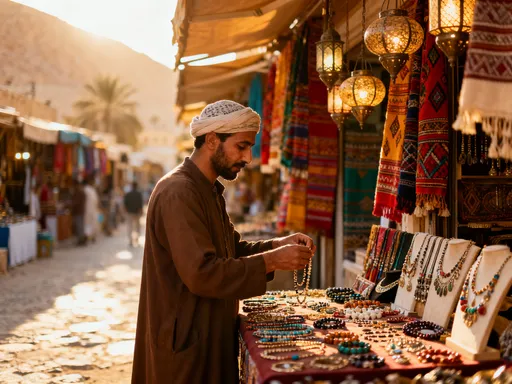
Another prime location is the cluster of craft stalls along the waterfront promenade. Unlike the inland market, this area caters more directly to tourists but retains a handmade authenticity. Artisans sit behind low tables, shaping silver jewelry, stringing beads, or carving olive wood. Many work openly, allowing photographers to document the process from raw material to finished product. The sea breeze keeps the air moving, preventing the sticky heat that can make midday shooting uncomfortable elsewhere. Reflections on the water add a dynamic backdrop, especially during sunrise and sunset when the sky paints the stalls in shifting hues.
Timing is crucial in both zones. Early morning, between 7:00 and 9:00 a.m., offers the best light and least foot traffic, ideal for clean compositions and detail shots. Mid-morning to noon sees increased activity, with deliveries arriving and stalls being restocked—excellent for capturing motion and interaction. Late afternoon, from 4:00 to 6:00 p.m., brings the return of local shoppers, creating a blend of tourist and community presence. Understanding pedestrian flow helps avoid obstructing pathways while positioning for optimal angles. Shooting from slightly elevated points—such as steps leading to a café or the edge of a sidewalk—can provide a broader context of the marketplace layout.
Directional awareness also enhances image quality. In Market Street, many shops face east-west, meaning morning light enters directly, illuminating interiors. By contrast, the waterfront stalls run north-south, receiving side lighting that accentuates depth and dimension. Using a compass app or simply observing shadow direction can help plan shooting schedules. Additionally, positioning yourself with the sun behind or to the side of your subject avoids flat, front-lit images and adds drama through chiaroscuro effects.
People, Products, and Permission: Ethics in Street Photography
Photographing people in Dahab’s markets requires more than technical skill—it demands respect and empathy. While some travelers snap photos without hesitation, the most meaningful images often come from moments of connection. Vendors, especially those whose livelihoods depend on personal interaction, appreciate acknowledgment before being photographed. A simple smile, eye contact, or raised camera with a questioning look can open a dialogue. Many understand the universal gesture of asking permission, even without shared language.
Learning a few basic Arabic phrases goes a long way. “Hal yumkinuni an astakhidh sura?” (Can I take a photo?) or “Shukran” (Thank you) shows effort and courtesy. When met with a nod or verbal consent, the resulting image carries greater authenticity. Subjects often relax, resuming their natural posture or activity, rather than posing stiffly. In some cases, they may invite you to photograph a specific item or demonstrate a technique, enriching the narrative potential of your shots.
There is a difference between photographing *people* and photographing *poverty*. Dahab’s markets are not exhibits of hardship but spaces of dignity and resilience. Avoid framing vendors as exotic or pitiable. Instead, focus on their expertise, pride in craftsmanship, and daily rhythms. A close-up of hands measuring spices, a portrait of a jeweler concentrating on a delicate setting, or a wide shot of a family working together—all convey respect while telling a powerful story. When children appear in scenes, ensure they are not isolated or made the sole subject unless with guardian approval.
Discretion matters. Using a large DSLR with a telephoto lens may draw unwanted attention or create distance. A smaller mirrorless camera or even a high-quality smartphone allows for unobtrusive shooting. Waiting for the right moment—such as when a vendor looks up naturally, laughs with a customer, or adjusts a display—yields more candid and emotionally resonant images than forced poses. The goal is not to capture *everything*, but to select moments that reflect truth and humanity.
From Snap to Story: Framing Commerce as Culture
A single photograph can capture beauty, but a sequence tells a story. In Dahab, the act of buying and selling is intertwined with cultural practices that unfold over time. Photographers can elevate their work by documenting processes rather than isolated moments. Consider following the journey of a loaf of bread—from the open-air oven where it’s baked, to the vendor wrapping it in paper, to the customer carrying it home. Each frame adds context, turning a simple transaction into a visual essay about sustenance, tradition, and community.
Other narrative threads include the preparation of herbal teas, the weaving of palm fronds into baskets, or the bargaining ritual between buyer and seller. These interactions are not rushed; they involve touch, smell, taste, and conversation. Capturing them requires patience and presence. Wait for the moment when a customer sniffs a bundle of mint before purchasing, or when a vendor demonstrates how to wear a handwoven scarf. Such details ground the image in sensory reality, making it relatable to viewers far from Dahab’s streets.
Themes emerge naturally from sustained observation. Sustainability is visible in reusable cloth bags, the absence of plastic packaging, and the reuse of containers. Tradition versus tourism appears in the contrast between handmade goods and imported trinkets sold side by side. The tension between old and new is evident in shop interiors—where a vintage scale sits beside a solar-powered light, or a Bedouin elder uses a smartphone to show photos of his grandchildren. These juxtapositions invite reflection without needing explicit commentary.
By organizing images into thematic series, photographers create depth and coherence. A portfolio on “The Life of Spices” might include shots of drying racks, grinding stones, labeled jars, and customers selecting blends for home remedies. Another series, “Hands of Dahab,” could focus solely on the hands of artisans—shaping metal, kneading dough, threading needles—emphasizing skill and labor. These narratives resonate emotionally, especially with audiences who value authenticity and cultural preservation.
Gear That Works: Lightweight Tools for Urban Mobility
Photographing Dahab’s commercial life demands agility and discretion. Heavy gear can be cumbersome on uneven sidewalks, attract unwanted attention, or limit spontaneity. A lightweight mirrorless camera with a fixed prime lens—such as a 35mm or 50mm—offers excellent image quality while remaining unobtrusive. These lenses provide a natural field of view, ideal for street photography, and perform well in low light, which is useful during early mornings or shaded alleys.
A polarizing filter is highly recommended, especially near the waterfront where reflections on glass, water, and polished surfaces can distract from the subject. It enhances color saturation and reduces glare without altering the scene’s authenticity. Carrying a small microfiber cloth helps keep lenses free of dust and salt spray, common in coastal environments. A compact tripod or monopod may be useful for long exposures during twilight hours, though handheld shooting is often more practical in crowded areas.
Smartphones, particularly recent models with advanced camera systems, are surprisingly effective tools. Their small size allows for discreet photography, and built-in editing apps enable quick adjustments before sharing. Using airplane mode or silent settings prevents disruptive notifications. For social media, capturing short video clips—such as a vendor pouring tea or stacking bread—adds movement and immediacy to static images. Geotagging posts with accurate location data helps preserve context and supports ethical storytelling.
Battery life is a practical concern. Carrying a portable charger ensures uninterrupted shooting, especially during full-day explorations. Storing cards in a waterproof case protects against sand and moisture. Beyond equipment, the most important tool is observation. Slowing down, listening, and allowing scenes to unfold naturally often leads to the most compelling images—ones that feel less taken and more given.
Turning Photos into Value: Sharing and Selling Your Dahab Story
Photographs from Dahab can extend beyond personal albums to serve broader purposes. When shared ethically, they become tools for cultural appreciation, education, and even economic support. Blog features or photo essays on travel platforms can introduce audiences to the town’s authentic spirit, countering stereotypes about the region. Including accurate captions—naming products, explaining uses, and honoring local terms—adds educational value and respects the subjects’ identities.
Stock photography platforms accept high-quality images of markets, food, crafts, and street life, provided they are model-released when people are identifiable. This offers a way to monetize work while contributing to visual libraries used by publishers, designers, and educators. However, it’s essential to avoid generic labels like “Middle Eastern market”—specificity matters. Describing a scene as “a spice vendor in Dahab, Egypt, arranging sumac and za’atar in cloth bins” provides context and honors the location’s uniqueness.
Collaborations with eco-conscious brands or fair-trade collectives present another avenue. Images that highlight handmade goods, sustainable practices, or artisan techniques can support ethical marketing efforts. Some photographers partner with local cooperatives to produce calendars, postcards, or exhibition prints, with proceeds benefiting the community. These initiatives foster reciprocity, ensuring that the act of photographing gives back in tangible ways.
Ultimately, the value of Dahab’s imagery lies not in perfection but in honesty. Crooked signs, weathered hands, uneven lighting—these are not flaws but features of a living culture. The most powerful photographs do not seek to美化 (beautify) but to reveal. They invite viewers to see not just a place, but a way of life unfolding with grace and resilience. For the photographer willing to look closely, listen deeply, and shoot with integrity, Dahab offers not just scenes to capture, but stories worth carrying home.