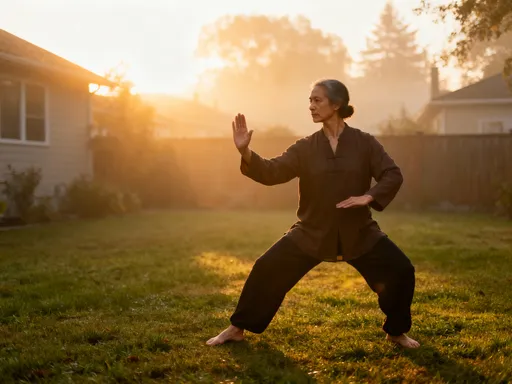
I used to feel constantly drained, no matter how much I slept. Then I discovered a simple qigong routine that changed everything. No fancy gear, no hour-long sessions—just 10 minutes a day of focused breathing and movement. It’s not magic, but it works. This ancient Chinese practice helped me rebalance my body naturally. If you’re tired of feeling tired, this might be what you’ve been missing. Let me walk you through how it actually works.
The Hidden Cost of Modern Fatigue
In today’s fast-paced world, fatigue has become a quiet epidemic. Many women between 30 and 55 report waking up already tired, struggling through mornings with coffee in hand, only to crash by mid-afternoon. The demands of family, work, and household responsibilities often leave little room for self-care. This constant state of exhaustion isn’t just inconvenient—it can erode long-term health. Chronic fatigue affects concentration, weakens immunity, and increases the risk of burnout. Despite getting adequate sleep, many still feel unrested, indicating that rest is about more than just hours logged in bed.
One of the main culprits behind this modern energy crisis is chronic stress. When the body remains in a prolonged state of alert—triggered by deadlines, financial concerns, or caregiving duties—it activates the sympathetic nervous system. This “fight-or-flight” response was designed for short-term survival, not daily life. Over time, this constant activation depletes energy reserves, disrupts digestion, and interferes with hormonal balance. Add to this a sedentary lifestyle, with long hours spent sitting at desks or in cars, and the body’s natural energy flow becomes stagnant.
Traditional Chinese Medicine (TCM) offers a different lens for understanding this fatigue. At its core is the concept of Qi (pronounced “chee”), the vital life force that flows through the body along pathways known as meridians. When Qi moves freely, the body functions optimally—organs work efficiently, emotions stay balanced, and energy remains steady. But when Qi becomes blocked or depleted, symptoms like fatigue, brain fog, and irritability arise. Unlike Western medicine, which often treats symptoms in isolation, TCM views fatigue as a sign of systemic imbalance.
Most people turn to quick fixes—energy drinks, sugary snacks, or multiple cups of coffee—to push through the day. While these may offer temporary relief, they often worsen the problem over time. Caffeine can disrupt sleep quality, and sugar spikes lead to crashes, creating a cycle of dependency. These solutions don’t address the root cause; they merely mask it. What’s needed is a sustainable way to restore energy at the source, not just boost it artificially. That’s where practices like qigong come in—not as a replacement for medical care, but as a complementary tool for long-term vitality.
What Is Qigong and Why It Works for Body Tuning
Qigong (pronounced “chee-gong”) is a centuries-old mind-body practice rooted in Traditional Chinese Medicine. It combines gentle physical movements, controlled breathing, and focused intention to cultivate and balance Qi. Unlike high-intensity workouts that strain the body, qigong emphasizes softness, rhythm, and awareness. It’s accessible to people of all ages and fitness levels, making it especially suitable for busy adults who want to improve their health without adding stress.
The word “qigong” itself breaks down into two parts: qi, meaning vital energy, and gong, meaning skill or practice. Together, it translates to “cultivating energy through practice.” In TCM, each organ system is associated with specific energy pathways, and qigong exercises are designed to stimulate and harmonize these flows. For example, certain movements are believed to support liver function, which in TCM governs the smooth flow of energy and emotions. Others target the kidneys, seen as the body’s energy reservoir.
Modern science is beginning to validate what practitioners have known for generations. Studies have shown that regular qigong practice can significantly reduce stress hormones like cortisol, improve heart rate variability, and enhance sleep quality. Research published in journals such as Complementary Therapies in Medicine has found that qigong can reduce symptoms of fatigue in individuals with chronic conditions. These benefits are not due to physical exertion but rather the practice’s ability to shift the body from a state of stress to one of restoration.
One of the most powerful aspects of qigong is its effect on the autonomic nervous system. Most people spend too much time in sympathetic dominance—alert, reactive, and tense. Qigong activates the parasympathetic nervous system, responsible for rest, digestion, and recovery. This shift doesn’t happen overnight, but with consistent practice, the body learns to return to balance more easily. It’s not about achieving perfection in form, but about creating a daily ritual of presence and renewal.
The 10-Minute Daily Reset: My Go-To Routine
After years of feeling drained, I committed to a simple 10-minute qigong routine each morning. I chose three foundational exercises: Lifting the Sky, Separating Heaven and Earth, and Microcosmic Orbit Breathing. These movements are gentle, easy to learn, and highly effective for restoring energy. I practice them barefoot on a yoga mat near a window, where natural light filters in. The space feels calm, and I’ve come to associate it with renewal.
The first exercise, Lifting the Sky, begins with feet shoulder-width apart and knees slightly bent. I inhale slowly as I raise my hands in front of me, palms up, all the way overhead, as if lifting an invisible weight. At the top, I pause briefly, then exhale as I lower my hands back down, palms facing the earth. This movement stretches the spine, opens the chest, and encourages deep diaphragmatic breathing. It’s said to strengthen the lungs and circulate Qi throughout the body. I repeat it six times, syncing each motion with my breath.
The second movement, Separating Heaven and Earth, builds on the first. I raise one hand overhead, palm facing up, while the other hand drops to my lower abdomen, palm down. As I inhale, I gently shift my weight and switch hands, creating a flowing, wave-like motion. This exercise creates a sense of energetic connection between the earth and the sky, promoting balance and grounding. It also engages the core and improves posture, which can help reduce fatigue caused by poor alignment.
The final segment is Microcosmic Orbit Breathing, a seated practice done at the end. I sit comfortably with a straight spine, hands resting on my lap. I close my eyes and breathe deeply into my lower abdomen, visualizing energy circulating in a loop from the base of my spine up the back and down the front of my body. This practice calms the mind, enhances focus, and integrates the effects of the physical movements. Even on days when I skip the full routine, just five minutes of this breathing practice helps me reset.
Within two weeks, I noticed changes. My mornings felt easier. I no longer reached for a second cup of coffee by 10 a.m. My mood improved, and I handled daily stressors with more patience. Midday crashes became less frequent. These shifts weren’t dramatic, but they were consistent. The key, I learned, wasn’t intensity—it was showing up every day, even when I didn’t feel like it.
Why Fast Results Are Possible—Without the Hype
Many people assume that meaningful health changes require drastic measures—strict diets, intense workouts, or expensive supplements. But the truth is, small, consistent actions often yield the most lasting results. Qigong works because it targets the body’s foundational systems: breath, movement, and nervous regulation. By practicing just 10 minutes a day, you’re sending a clear signal to your body that it’s safe to rest, repair, and recharge.
The autonomic nervous system plays a central role in this transformation. When we’re stressed, the body prioritizes survival over maintenance. Digestion slows, inflammation increases, and energy is diverted from long-term health. Qigong helps reverse this pattern by stimulating the vagus nerve, a key component of the parasympathetic system. This shift doesn’t happen instantly, but with daily practice, the body becomes more resilient. It’s like compound interest for well-being—small deposits of calm and focus accumulate into significant gains over time.
Skepticism is natural, especially when the movements seem so simple. How can raising your hands slowly really make a difference? But the power lies not in the motion itself, but in the integration of breath, awareness, and intention. Each movement becomes a meditation in motion, training the mind to stay present and the body to release tension. Studies have shown that even brief mindfulness practices can reduce perceived stress and improve mental clarity within days.
Consistency matters far more than perfection. You don’t need to practice flawlessly or for long durations to benefit. In fact, aiming for perfection can become a barrier to practice. The goal is not to master the form but to show up for yourself, day after day. Over time, these moments of stillness and movement build a foundation of resilience. Energy levels stabilize, sleep improves, and emotional balance becomes easier to maintain. It’s not about fixing everything at once—it’s about creating a sustainable rhythm of care.
Integrating Qigong Into Real Life (No Retreat Required)
One of the greatest strengths of qigong is its adaptability. You don’t need special equipment, a large space, or hours of free time. I started by practicing during my morning routine, right after brushing my teeth and before making coffee. Now, it’s as natural as washing my face. Some days, I do the full 10-minute sequence. On busier days, I do just one movement or a few minutes of breathing. The key is to make it part of your existing rhythm, not an added burden.
If mornings don’t work, evenings can be equally effective. A short session before bed helps quiet the mind and prepare the body for restful sleep. I’ve also adapted seated versions for days when I’m traveling or stuck at a desk. Even 3–5 minutes of mindful breathing at my office chair can reset my energy. The movements can be modified for physical limitations—those with joint issues can reduce range of motion or practice while seated.
Technology can support the practice rather than distract from it. I use a simple timer on my phone with a gentle chime to mark the end of 10 minutes. Some apps offer guided qigong sessions, which can be helpful for beginners. I also set a daily reminder to reinforce the habit. Over time, the practice becomes self-sustaining—not because I’m disciplined, but because I feel the difference. It’s no longer something I “should” do; it’s something I want to do.
For those just starting, I recommend beginning with five minutes and gradually increasing. Choose one or two movements that feel good and repeat them. Don’t worry about getting it “right.” Focus on your breath and how your body feels. Over time, your body will guide you toward what it needs. The most important step is simply beginning. Progress isn’t measured by how perfectly you perform the movements, but by how consistently you return to them.
What Science Says—And What It Doesn’t
While qigong has ancient roots, modern research is increasingly validating its benefits. Peer-reviewed studies have shown that regular practice can reduce markers of inflammation, improve cardiovascular function, and support immune health. For example, a 2020 meta-analysis published in Explore: The Journal of Science and Healing found that qigong significantly reduced fatigue in adults with chronic conditions. Other research has linked it to improved balance in older adults and reduced anxiety in clinical populations.
These findings suggest that qigong’s effects go beyond placebo. The combination of rhythmic movement, deep breathing, and mental focus appears to regulate key physiological systems. It lowers cortisol, improves oxygenation, and enhances vagal tone—all factors that contribute to sustained energy and resilience. However, it’s important to note that qigong is not a cure-all. It does not replace medical treatment for underlying health conditions. Instead, it serves as a supportive practice that enhances overall well-being.
Some aspects of qigong, such as the flow of Qi, are not easily measured by current scientific methods. This doesn’t mean they aren’t real, but rather that they fall outside the scope of conventional measurement. Science continues to explore the mind-body connection, and practices like qigong offer valuable insights. What matters most is how you feel. If your energy improves, your sleep deepens, and your mood stabilizes, those are tangible outcomes worth honoring.
As with any new health practice, it’s wise to consult a healthcare provider, especially if you have chronic health issues or are pregnant. While qigong is generally safe, individual needs vary. The goal is not to follow a rigid protocol, but to find what supports your unique body. Benefits are gradual and cumulative, not immediate or guaranteed. But for many, the practice becomes a cornerstone of sustainable health.
From Survival Mode to Sustainable Balance
Looking back, I realize I was living in survival mode for years—pushing through fatigue, ignoring my body’s signals, and measuring my worth by productivity. Qigong didn’t just give me more energy; it taught me to listen to my body again. Over time, I noticed deeper sleep, better digestion, and a greater sense of emotional stability. I’m not perfect—some days are still hard—but I recover faster and stay more centered.
This practice isn’t about optimization or performance. It’s about restoration. It’s about honoring the body’s natural rhythms instead of fighting against them. In a culture that glorifies busyness, taking 10 minutes to breathe and move is a quiet act of resistance. It’s a way of saying, “I matter. My well-being matters.” That shift in mindset has been as powerful as the physical benefits.
Qigong has become my daily reset button—a way to clear mental clutter, release physical tension, and reconnect with myself. It’s not a quick fix, but a lifelong practice. Some days, I do it for energy. Other days, I do it for peace. But every time, I show up. And that, more than anything, has made the difference.
If you’re tired of feeling tired, consider giving yourself this small gift. Not because you have to, but because you deserve to feel alive. You don’t need to transform your life overnight. You just need to begin—on your mat, in your living room, one breath at a time. The journey to sustainable energy starts not with a grand gesture, but with a single, intentional moment of presence.