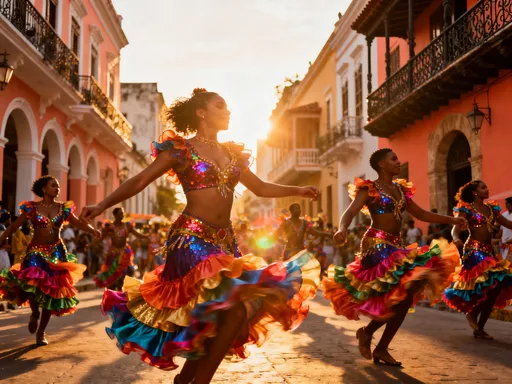
If you’ve ever wondered where color, rhythm, and joy explode into the streets like nowhere else, Cartagena’s festival culture is a living masterpiece. I walked through crowds pulsing with salsa, watched dancers in dazzling costumes light up the night, and felt the city breathe music. This isn’t just celebration — it’s identity. From the cobblestone alleys of the walled city to the sun-drenched plazas of Getsemaní, every corner becomes a stage during peak festivity. The air hums with drumbeats, laughter, and the sizzle of street food. This is more than tourism; it’s an invitation to witness a culture that honors its past while dancing boldly into the future. Discover the hidden heart of Colombia’s most vibrant coastal gem, where every festival tells a story older than the colonial walls.
The Soul of Cartagena: Where Festivals and History Meet
Cartagena’s festivals are not mere events — they are echoes of centuries, woven into the very fabric of the city’s identity. Founded in 1533, this UNESCO World Heritage city has survived sieges, colonial rule, and centuries of cultural transformation. Yet through it all, celebration has remained a constant, a way for its people to reclaim joy, preserve heritage, and assert resilience. The city’s festival culture is deeply rooted in its tri-ethnic foundation: Indigenous traditions, African spiritual rhythms, and Spanish Catholic rituals have merged over time into a unique cultural expression that pulses through every public gathering.
One need only walk through the historic center during Holy Week or the lead-up to Independence Day to feel this layered history. Religious processions still follow routes established hundreds of years ago, with statues of saints carried through the same streets once patrolled by conquistadors. But these solemn moments coexist with vibrant street parties where Afro-Caribbean drumming sets the tempo. The blend is not contradictory — it is harmonious, a reflection of a people who have learned to celebrate life even in the face of hardship. The colonial architecture, with its pastel-colored balconies draped in bougainvillea, serves as a timeless backdrop to this living culture.
Music is the soul of this fusion. The sounds of cumbia, mapalé, and champeta are not just entertainment; they are historical documents played on drums, flutes, and voices. Cumbia, for instance, originated as a courtship dance among Indigenous and African communities along the riverbanks, later adopted and adapted by Spanish settlers. Today, it is performed in grand parades, but its roots remain visible in the circular formations, the candle-lit headdresses of female dancers, and the steady beat of the tambor llamador. These traditions are not preserved in museums — they are danced in the streets, taught in homes, and passed from grandparents to grandchildren.
The visual language of the festivals is equally rich. Costumes are more than colorful outfits; they are statements of identity. Feathered headdresses, sequined bodysuits, and hand-painted masks often carry symbolic meanings — representing ancestral spirits, maritime life, or resistance to oppression. During the Festival of San Pedro, fishermen in La Boquilla neighborhood dress in netted garments and carry miniature boats, honoring their patron saint and the sea that sustains them. These rituals are not performed for tourists; they are acts of devotion, community, and cultural pride.
Carnival Beyond Barranquilla: Cartagena’s Local Take
When most people think of Colombian carnival, Barranquilla immediately comes to mind. Its four-day extravaganza, recognized by UNESCO as Intangible Cultural Heritage, draws hundreds of thousands with its elaborate floats, celebrity performers, and televised parades. But Cartagena offers a different kind of carnival — one that is quieter, more intimate, and deeply rooted in neighborhood life. While it may lack the massive scale of Barranquilla, Cartagena’s celebration is no less powerful. It unfolds not in stadiums, but in plazas, alleys, and front patios, where locals gather to dance, cook, and sing together.
The heart of Cartagena’s carnival activity beats strongest in the Getsemaní and Manga neighborhoods. Here, the festivities begin weeks before the official dates, with impromptu drum circles forming at dusk and pop-up food stalls serving coconut rice, fried plantains, and grilled fish. The Plaza de la Aduana becomes a stage for cultural performances — folkloric dance troupes in vibrant skirts whirl to live bands, while children mimic their moves with infectious energy. Unlike the choreographed precision of larger carnivals, these moments feel spontaneous, organic, and inclusive.
One of the most striking aspects of Cartagena’s carnival is its accessibility. There are no grandstands or VIP sections. Instead, everyone is invited to join. A visitor might find themselves pulled into a dance line by a grandmother in a sequined dress or handed a tambourine by a teenager in the middle of a street jam. The music never stops — from early evening until dawn, different blocks host their own parties, each with its own flavor. In Bocagrande, the vibe is more modern, with DJs spinning champeta remixes; in Getsemaní, traditional cumbia and bullerengue dominate.
This decentralized, community-driven approach reflects a deeper truth about Cartagena: its culture is not curated for outsiders. While tourism has grown, the city’s soul remains local. The carnival here is not a performance — it is a continuation of everyday life, amplified. There are no entry fees, no tickets, and no schedules. The rhythm is set by the people, and the only requirement to participate is willingness. For travelers seeking authenticity, this is the real carnival — unfiltered, unscripted, and unforgettable.
The Magic of Festival Seasons: When to Go and Why It Matters
While carnival season captures global attention, Cartagena’s festival calendar is rich throughout the year. Knowing when to visit can transform a simple trip into a profound cultural experience. Each season brings its own energy, crowd dynamics, and traditions, offering different ways to connect with the city. For those planning a visit, aligning travel dates with key celebrations can deepen understanding and create lasting memories.
Holy Week, or Semana Santa, is one of the most significant times to be in Cartagena. As a deeply Catholic country, Colombia observes this week with both solemnity and celebration. Processions wind through the old city, with participants in purple robes carrying wooden crosses. The atmosphere is reverent, yet not somber — families gather in plazas after services, sharing meals and music. Hotels often book up months in advance, and prices rise, but the cultural depth is unmatched. It’s a time when faith and festivity coexist, offering a rare glimpse into the spiritual heart of the city.
Independence Day on July 20 is another highlight. The entire country celebrates Colombia’s declaration of independence from Spain in 1810, and Cartagena, as a historic stronghold of the independence movement, marks the occasion with particular pride. The city hosts official parades, fireworks over the bay, and patriotic concerts. Streets are adorned with yellow, blue, and red — the colors of the national flag. This is a joyful, family-oriented celebration, with children waving flags and vendors selling arepas and churros. The mood is festive, nationalistic in the best sense — a celebration of unity and freedom.
For music lovers, January brings the Cartagena International Music Festival, a growing event that attracts classical, jazz, and world music performers from across Latin America and Europe. Held in historic venues like the Convent of San Francisco and the Teatro Heredia, the festival offers a more refined cultural experience. While less raucous than carnival, it provides a chance to appreciate Cartagena’s artistic sophistication. Tickets are required for most performances, but many outdoor concerts are free, allowing locals and visitors alike to enjoy world-class music under the stars.
Travelers should consider crowd levels and accommodation availability when planning. Peak festival times mean higher prices and limited room options, especially within the walled city. Booking six to eight weeks in advance is advisable. However, staying slightly outside the historic center — in neighborhoods like Laguito or Crespo — can offer better value while still providing easy access to events. For those who prefer a quieter experience, visiting just before or after major festivals allows enjoyment of residual celebrations without the peak-season pressures.
Hidden Celebrations Only Locals Know
Beyond the well-known festivals lies a calendar of smaller, deeply local events that reveal the true rhythm of Cartagena life. These are not marketed to tourists, rarely appear on official city guides, and are often spoken of in hushed tones among residents — not out of secrecy, but because they are simply part of the fabric of community. To experience them is to step beyond the postcard image of Cartagena and into its living, breathing reality.
One such event is the Fiestas del Mar, held each August in the coastal neighborhood of La Boquilla. This celebration honors the sea, the source of livelihood for generations of fishermen. The day begins with a blessing of the boats, where priests sprinkle holy water on colorful wooden vessels before they set out to sea. Children run along the shore, flying kites shaped like fish and crabs. Food stalls line the beach, offering grilled mojarra, coconut flan, and fresh coconut water served in the shell. In the afternoon, a small parade winds through the village, with dancers in seashell-adorned costumes and drummers mimicking the sound of waves. There are no grandstands, no media coverage — just neighbors, music, and the ocean.
Another hidden gem is the celebration of patron saints in the neighborhoods of Getsemaní and Manga. Each barrio has its own saint, and the annual feast day is a major event. In Getsemaní, the Fiestas de la Virgen del Carmen in July bring the entire community together. The statue of the Virgin is carried through the streets on a flower-covered platform, followed by families, musicians, and dancers. Homes open their doors to guests, serving traditional dishes like sancocho and patacones. At night, a community dance takes place in the central plaza, lit by strings of colored lights. These events are not performances — they are acts of devotion and belonging.
What makes these celebrations special is their intimacy. They are not designed for mass tourism; they exist because the community wants to celebrate together. Participation is natural, not forced. A visitor who shows respect — by dressing modestly, asking before taking photos, and accepting an offered plate of food — will often be welcomed as a guest. These moments of connection, brief as they may be, often become the most cherished memories of a trip. They remind us that culture is not something to be consumed — it is something to be shared.
Immersive Experiences: How to Join, Not Just Watch
To truly understand Cartagena’s festival culture, one must move beyond observation and step into participation. The city offers numerous ways for visitors to engage meaningfully, to become temporary members of the celebration rather than passive onlookers. The difference between watching a dance and learning its steps, between hearing music and playing a drum, is the difference between seeing a culture and feeling it.
Salsa dancing is perhaps the most accessible entry point. While Cartagena is not as famous for salsa as Cali, the rhythm is everywhere. Outdoor dance classes are frequently held in Plaza Santo Domingo and along the Malecón, especially during festival seasons. These sessions, often led by local instructors, welcome all levels. Beginners learn basic steps; more experienced dancers pick up regional variations. The goal is not perfection — it’s connection. As one local instructor put it, “Salsa is not about the feet. It’s about the heart.”
For those interested in craftsmanship, workshops in mask-making and costume design offer a hands-on way to engage with tradition. In Getsemaní, several community centers offer short courses during festival months, teaching visitors how to create papel maché masks adorned with feathers, beads, and paint. These masks are not just decorative — they represent spirits, ancestors, or characters from local folklore. Creating one is a meditative act, a way to understand the symbolism behind the spectacle.
Another powerful way to participate is by joining a comparsa — a neighborhood parade group. Many of these groups welcome visitors to march with them, wear their colors, and dance alongside locals. No prior experience is needed; enthusiasm is the only requirement. Being part of a comparsa means moving with the rhythm of the city, feeling the heat of the sun, the beat of the drums, and the collective joy of the crowd. It is a moment of unity, a temporary citizenship in a celebration that transcends language and nationality.
Respectful engagement is key. This means dressing appropriately, following local cues, and avoiding behaviors that might be seen as exploitative. Taking photos is fine, but asking permission shows consideration. Buying crafts directly from artisans supports the community. Learning a few phrases in Spanish — “¿Puedo bailar contigo?” (Can I dance with you?) or “Gracias por la invitación” (Thank you for the invitation) — goes a long way. These small gestures signal that the visitor is not just passing through, but seeking connection.
Navigating the City During Peak Festivity
While Cartagena’s festivals are joyful and welcoming, they also bring logistical challenges. Crowds swell, streets close, and transportation becomes more complex. For visitors, preparation is essential to ensure safety, comfort, and full enjoyment of the experience. The city is well accustomed to managing large gatherings, but knowing how to move through the festivities with ease makes all the difference.
Transportation is one of the first considerations. During peak times, ride-hailing apps like Uber operate efficiently, but it’s wise to book in advance, especially late at night. Certified taxis are also available and can be requested through hotels. It’s best to avoid unmarked vehicles. For shorter distances, walking is often the best option — the historic center is compact, and many festivals take place within a few square blocks. However, sidewalks can become crowded, so staying aware of surroundings is important.
Hydration and sun protection are critical. Cartagena’s coastal climate is hot and humid year-round, and festival days often involve hours outdoors. Carrying a reusable water bottle, wearing a hat, and applying sunscreen regularly are simple but vital precautions. Many plazas and parks have water stations, and vendors sell fresh fruit juices and coconut water. It’s also wise to carry a small fan or cooling towel, especially for older travelers or those with health concerns.
Accommodation should be booked well in advance, particularly within the walled city and Getsemaní. These areas are closest to the main festivities but fill up quickly. For families or those seeking more space, neighborhoods like Laguito or Castillogrande offer quieter stays with easy access to events. Staying with a local host through reputable homestay platforms can also provide deeper cultural insight and practical advice.
Safety is generally good during festivals, thanks to increased police and volunteer presence. The city has a strong tradition of community policing during large events, with neighborhood watch groups helping to maintain order. Still, standard precautions apply: keep valuables secure, avoid poorly lit areas at night, and stay with groups when possible. Most importantly, trust local guidance. If a street feels crowded or a situation seems uncertain, asking a vendor or police officer for advice is always wise.
Why Festival Travel Changes How You See the World
Attending a festival in Cartagena is more than a vacation — it is a transformation. In a world where travel often means checking landmarks off a list, festival immersion offers something deeper: the chance to feel part of something larger than oneself. It breaks down the barrier between visitor and local, between observer and participant. In the shared rhythm of a drum circle, the collective joy of a street dance, or the quiet reverence of a candlelit procession, we are reminded of our common humanity.
Cultural immersion fosters empathy. When we dance with strangers, eat food prepared by a grandmother’s hands, or listen to stories passed down through generations, we begin to see the world through different eyes. Stereotypes dissolve. Preconceptions fade. We realize that joy, grief, faith, and celebration are universal, even if their expressions vary. This is the true power of festival travel — not just to entertain, but to educate, to connect, to change.
For women aged 30 to 55, many of whom balance family, work, and personal growth, such experiences can be especially meaningful. They offer a rare opportunity to step outside routine, to rediscover joy, and to return home with renewed perspective. A mother who dances in the streets of Getsemaní may carry that freedom back to her daily life. A wife who learns to make a traditional mask may find new creative confidence. These moments are not escapes — they are expansions.
Traveling mindfully — with respect, curiosity, and openness — ensures that these festivals remain vibrant for generations to come. It means supporting local artisans, honoring traditions, and leaving no trace of disrespect. It means remembering that we are guests in a living culture, not consumers of a spectacle. Cartagena does not exist for our entertainment; it invites us to share in its life.
So come not as a spectator, but as a temporary citizen of its joy. Let the music move you, the colors awaken you, and the people welcome you. In the heart of Cartagena’s festivals, you may just find a piece of yourself you didn’t know was missing. This is not just travel — it is belonging.