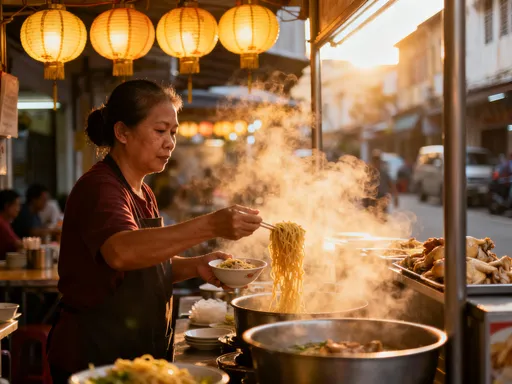
If you think Malaysian food stops at Kuala Lumpur or Penang, think again. Hidden in the quiet hills of Perak lies Ipoh—a city that quietly reigns as one of the country’s most authentic culinary gems. From steaming claypot chicken rice to silky smooth bean sprout noodles, every bite tells a story of heritage, heat, and heart. I didn’t expect to fall so hard for a small town’s food scene—until I did. This is your insider journey into Ipoh’s soul, one delicious plate at a time.
Discovering Ipoh: More Than Just a Pit Stop
Often overlooked by travelers rushing between Kuala Lumpur and Penang, Ipoh is a city of quiet charm and deep-rooted history. Once a booming tin-mining hub during the British colonial era, it now stands as a graceful blend of old-world architecture and modern Malaysian life. Elegant shophouses with arched windows line cobbled streets, while towering limestone karsts rise gently in the distance, framing the city like natural sentinels. This is not a place built for speed—it invites slowness, observation, and above all, indulgence in its culinary traditions.
What makes Ipoh truly special is its cultural mosaic. Over generations, Malay, Chinese, and Indian communities have lived side by side, sharing not just neighborhoods but also kitchens. The result is a food culture that doesn’t just borrow from different traditions—it weaves them together seamlessly. A single street might host a Malay nasi kandar stall beside a Cantonese dim sum shop and an Indian rojak vendor, each drawing loyal crowds from all backgrounds. This harmony isn’t forced; it’s born of daily life, shared meals, and mutual respect.
The city’s walkable Old Town is a dream for food explorers. Unlike the bustling chaos of larger urban centers, Ipoh moves at a relaxed pace. You can wander for hours without feeling rushed, ducking into alleyways to find steaming bowls of curry mee or stopping at open-air cafes for a cup of the region’s famous white coffee. There are no grand tourist traps here—just unassuming eateries, often family-run for decades, where quality speaks louder than marketing. The lack of international fame has preserved its authenticity, making Ipoh one of Malaysia’s best-kept food secrets.
Yet beneath its calm surface lies a vibrant street food culture. While other cities chase foodie trends, Ipoh remains grounded in tradition. Its culinary reputation isn’t built on Instagrammable plating or celebrity chefs, but on consistency, flavor, and the pride of generations who’ve perfected their craft. For the discerning traveler, this makes Ipoh not just a destination, but a revelation—a reminder that some of the world’s most satisfying meals come from the most unassuming places.
The Heart of Ipoh’s Food Scene: Where Tradition Meets Taste
At the core of Ipoh’s culinary excellence is its reverence for ingredients. Locals often say the secret lies in the water—and there’s truth to that. The city sits on mineral-rich aquifers fed by limestone caves, and this unique water source is believed to give Ipoh’s produce an unmatched crispness and sweetness. Nowhere is this more evident than in the city’s prized bean sprouts, known locally as *taugeh*. These aren’t your average sprouts; they’re plump, crunchy, and almost milky in texture, grown in clean, cool water and harvested daily. When tossed into a bowl of chicken noodle soup, they add a freshness that elevates the entire dish.
Another cornerstone of Ipoh’s food identity is its white coffee, or *kopi putih*. Unlike the dark, bitter brews found elsewhere, Ipoh’s version is made from beans roasted in palm oil margarine without sugar or wheat, then served with sweetened condensed milk. The result is a smooth, creamy drink with a delicate caramelized aroma and a gentle roast—never overpowering. The tradition dates back to the 1930s, when Hainanese immigrants began roasting coffee for British plantation managers. Today, it’s a symbol of the city’s heritage, served in old-school coffee shops where patrons sip slowly from thick ceramic mugs.
What sets Ipoh apart is its commitment to time-honored methods. Many of the best eateries are not restaurants in the modern sense, but humble hawker stalls or roadside cafes run by families who’ve passed down recipes for three or even four generations. These are not franchises or trendy pop-ups—they are institutions. The owners often wake before dawn to prepare broths, marinate meats, and hand-cut noodles. There’s no cutting corners, no reliance on pre-made mixes. Every element is made from scratch, ensuring a depth of flavor that can’t be replicated.
This dedication to authenticity means that trends come and go without disturbing the rhythm of Ipoh’s food culture. You won’t find fusion gimmicks or molecular gastronomy here—and that’s exactly the point. The city’s strength lies in mastery of the classics. Whether it’s a perfectly poached egg, a tender piece of salt-baked chicken, or a silken tofu pudding trembling in a ginger syrup, the focus is on doing one thing exceptionally well. For visitors, this is a rare gift: the chance to taste food as it was meant to be, shaped by history, geography, and generations of care.
Must-Try Dishes: A Flavor-Packed Roadmap
No visit to Ipoh is complete without sampling its signature dishes, each a masterpiece of balance and technique. At the top of any food lover’s list is **bean sprout chicken noodles**, a deceptively simple dish that showcases the city’s culinary philosophy. Shredded poached chicken, fresh bean sprouts, and springy egg noodles are served in a light, fragrant broth or as a dry toss with a savory sauce. The magic lies in the contrast—tender meat, crunchy sprouts, and a hint of sesame oil that ties everything together. Best enjoyed at a crowded hawker stall like Sin Yoon Loong or Foh San, where the turnover ensures peak freshness.
Another must-try is **salted chicken**, a specialty that highlights Ipoh’s mastery of texture and seasoning. Whole chickens are marinated in a blend of salt, herbs, and rice wine, then baked or steamed until the skin is crisp and the meat falls off the bone. Unlike heavily spiced versions found elsewhere, this dish is subtle, allowing the natural flavor of the poultry to shine. It’s often served with a side of ginger paste and a bowl of clear broth, making it both satisfying and surprisingly light. The best versions are found in dedicated chicken rice stalls, where the aroma alone draws people off the street.
Sweet tooths will find joy in **tofu pudding**, or *tau fu fa*. This delicate dessert consists of freshly made soy milk curd, so soft it quivers at the touch, served warm with a light syrup infused with ginger or pandan. It’s comfort in a bowl—creamy, slightly sweet, and utterly soothing. Some stalls offer it with caramelized sugar for a deeper flavor, while others keep it plain to highlight the purity of the tofu. Either way, it’s a testament to the skill of local soy artisans, who still make it using traditional stone grinders and cloth presses.
For those who crave something spicier, **curry mee** is a satisfying choice. This rich noodle soup features yellow noodles and rice vermicelli in a coconut milk-based curry broth, topped with boiled eggs, fried tofu, and blood cockles. What makes Ipoh’s version stand out is its balance—creamy but not heavy, spicy but not overwhelming. The broth is simmered for hours with curry paste, lemongrass, and spices, developing a deep, layered flavor. It’s typically eaten for breakfast or lunch at open-air eateries, where diners sit on plastic stools and share tables with strangers.
And no food journey would be complete without **Ipoh white coffee**, which deserves its own category. More than just a drink, it’s a cultural experience. Served in old-school coffee shops with checkered tiles and ceiling fans, it’s best enjoyed slow, alongside a piece of kaya toast or steamed bun. The coffee’s smoothness pairs perfectly with the slight tang of coconut jam, creating a breakfast ritual that has sustained generations. Whether you’re a coffee connoisseur or just someone who enjoys a good cup, Ipoh’s version is a revelation—one that lingers long after the last sip.
Following the Local Food Trail: From Morning Markets to Midnight Bites
To truly experience Ipoh’s food culture, follow the rhythm of the locals. Begin your day at the **wet market**, where the morning air is thick with the scent of fresh herbs, roasting coffee, and simmering broths. These markets are not just for shopping—they’re breakfast destinations. Look for stalls serving *kaya toast sets*, where thick-cut bread is toasted over charcoal, slathered with coconut jam and butter, and served with a soft-boiled egg and a cup of white coffee. It’s a simple meal, but one that anchors the day with warmth and tradition.
As the sun climbs, move into **Old Town**, where the real food adventure begins. This is where the city’s most famous eateries cluster, often tucked into narrow shophouses with faded signs and plastic chairs. Start with a bowl of bean sprout chicken noodles—arrive early, as the best stalls sell out by mid-morning. Afterward, take a leisurely walk through the colonial-era streets, pausing at a roadside vendor for a cup of sugarcane juice or a skewer of grilled satay.
By midday, seek out a **claypot chicken rice** stall, where whole chickens are slow-cooked in earthenware pots with rice, mushrooms, and lap cheong sausage. The result is a fragrant, slightly smoky dish with rice that’s crispy at the bottom and fluffy on top. It’s hearty enough for lunch but light enough not to ruin your appetite for more. Pair it with a glass of iced barley drink to cut the richness.
After a midday break—perhaps a quiet moment in one of the city’s limestone caves or a visit to a heritage temple—resume your food trail in the late afternoon. This is the perfect time to explore **hawker centers** and **night markets**, where the energy picks up as vendors fire up their woks. Try *yong tau foo*, a Hakka-inspired dish where tofu and vegetables are stuffed with fish paste and served in a clear broth or as a dry mix with sauce. It’s customizable, healthy, and deeply satisfying.
End your day with something warm and comforting—perhaps a bowl of *roasted chestnuts* from a street vendor or a plate of *steamed buns* filled with lotus paste or salted egg yolk. Ipoh’s food scene doesn’t shut down at sunset; it transforms. The cooler evening air makes rich flavors more inviting, and the slower pace allows you to savor each bite. The key is pacing: share dishes, take breaks, and let your meal unfold like a story, one chapter at a time.
Beyond the Plate: How Food Shapes Ipoh’s Identity
In Ipoh, food is more than sustenance—it’s a thread that connects people, generations, and traditions. Meals are rarely eaten in silence; they’re occasions for conversation, laughter, and storytelling. During festivals like Chinese New Year or Hari Raya, families gather not just to celebrate, but to cook together, passing down recipes that have been refined over decades. A grandmother might teach her granddaughter how to poach chicken just right, or a father might show his son the secret to a perfect curry mee broth. These moments aren’t just about food—they’re about belonging.
The city’s hawker stalls are living archives of this heritage. Many are run by descendants of the original founders, who still use the same pots, woks, and techniques as their ancestors. Some stalls don’t even have signs—they’re known by word of mouth, by the line of regulars who show up rain or shine. This continuity is a source of pride for locals, who see their cuisine as a reflection of resilience and identity. Even as younger generations move to cities for work, many return to take over family businesses, ensuring that these flavors don’t disappear.
Food also plays a role in community bonding. Neighbors gather at kopitiams not just to eat, but to catch up, debate local news, and share advice. A good meal is often the centerpiece of reconciliation, celebration, or condolence. In this way, food becomes a language of care—a way to say, “I’m here for you,” without speaking a word. It’s no surprise that visitors often remark not just on the taste of the food, but on the warmth of the people who serve it.
Tourism has brought more attention to Ipoh, but so far, it hasn’t diluted the authenticity of its food culture. While some new cafes have opened to cater to visitors, the heart of the scene remains unchanged. Locals still eat where they’ve always eaten, and the best dishes are still made the same way. If anything, the growing interest has sparked a renewed appreciation for local heritage, with younger Malaysians seeking out traditional flavors in a world of fast food and global chains. In Ipoh, food isn’t just preserved—it’s cherished.
Smart Eating: Balancing Adventure and Practicality
Exploring Ipoh’s food scene is a joy, but it requires a bit of strategy. First, come prepared with **cash**—many of the best stalls don’t accept cards, and ATMs aren’t always nearby. Keep small bills on hand for quick transactions. Second, wear **comfortable shoes**. You’ll be walking a lot, often on uneven pavement, and the tropical heat means comfort is key.
Hydration is essential. The Malaysian climate is warm and humid, and spending hours eating rich, savory foods can dehydrate you quickly. Sip water regularly, and balance your meals with refreshing drinks like chilled soy milk, sugarcane juice, or iced barley water. Avoid overloading on spicy dishes early in the day—save the curry mee and chili dips for when your palate has adjusted.
One of the best ways to enjoy more food without overeating is to **share dishes**. Malaysian meals are inherently communal, and most stalls are happy to serve smaller portions or let you sample a bit of everything. This allows you to try a wider variety while minimizing waste. It’s also a great way to connect with fellow diners—strangers often end up recommending their favorite dishes to each other.
Be mindful of **peak hours**. Popular stalls can have long lines, especially during breakfast and lunch. Arriving early—around 7:00 or 7:30 a.m.—can help you beat the crowd and ensure you get the freshest food. If you’re visiting during a weekend or festival, plan extra time, as some places may close early or run out of stock.
Finally, don’t be afraid to ask for help. While English is widely understood, knowing a few basic phrases in Mandarin or Malay can go a long way. A simple “*Boleh tahan pedas?*” (“Is it spicy?”) or “*Satu set kaya toast, terima kasih*” (“One kaya toast set, thank you”) shows respect and often earns you a smile. The people of Ipoh are proud of their food and happy to guide newcomers—just come with an open mind and an empty stomach.
Why Ipoh Should Be on Every Food Traveler’s Radar
In a world where food destinations are often defined by fame, crowds, and social media buzz, Ipoh stands apart. It offers something increasingly rare: authenticity without pretense. Here, you won’t find overpriced tasting menus or influencers blocking your view of the food. Instead, you’ll find humble stalls, warm service, and flavors that speak for themselves. It’s a place where culinary excellence isn’t performative—it’s personal.
Compared to more well-known food cities, Ipoh is refreshingly affordable. A full meal with drink might cost less than ten dollars, and the quality far exceeds what you’d get elsewhere for double the price. This accessibility makes it ideal for families, solo travelers, and anyone who values substance over spectacle. You don’t need a luxury budget to eat well—you just need curiosity and an appetite.
But beyond the taste and value, Ipoh offers a deeper experience: the chance to slow down and connect. In a society that often moves too fast, this city reminds us that food is meant to be savored, shared, and celebrated. It invites mindful eating—not as a trend, but as a way of life. When you sit at a plastic table, sipping white coffee as the morning light filters through the shophouse awnings, you’re not just tasting a dish. You’re stepping into a story—one of migration, resilience, and daily joy.
For the 30- to 55-year-old woman who values family, tradition, and meaningful experiences, Ipoh speaks directly to the heart. It’s a destination where you can indulge your senses without sacrificing comfort or safety. Where your children or parents can enjoy a meal just as much as you do. Where every bite feels familiar, even if you’ve never been there before.
So yes, you should go. Not because it’s trendy, but because it’s real. Because in Ipoh, food isn’t just fuel—it’s love made edible. And in a world that often feels disconnected, that’s something worth traveling for.