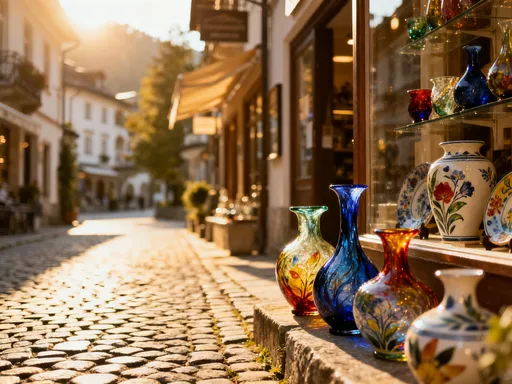
You know that feeling when a place just gets you? Karlovy Vary did that to me. I went for the spas, stayed for the art-filled streets and hidden boutiques where every item tells a story. This isn’t your average souvenir run—think hand-blown glass, painted ceramics, and local designers turning tradition into something fresh. If you’ve ever wanted to take a piece of Europe’s soul home with you, let me show you how Karlovy Vary makes shopping feel like discovery. Nestled in the rolling hills of the Czech Republic, this elegant spa town is more than thermal springs and colonnades; it’s a living gallery where craftsmanship flows through cobbled lanes and quiet alleyways. Here, shopping is not a transaction—it’s a conversation with history, culture, and creativity.
The Artistic Pulse of Karlovy Vary
Karlovy Vary pulses with an artistic energy that feels both timeless and refreshingly current. Known globally for its healing thermal springs and grand 19th-century architecture, the town has long been a magnet for Europe’s cultural elite. But beyond the spa treatments and historic hotels lies a quieter, deeper current: a centuries-old devotion to craftsmanship. The town’s artistic identity is rooted in three enduring traditions—glassmaking, ceramics, and architectural ornamentation—each shaped by the natural resources of the region and the refined tastes of its visitors. Bohemian crystal, in particular, has been a hallmark of Czech artistry since the Renaissance, and Karlovy Vary stands at the heart of this legacy.
The 1800s marked a golden era for the town, as emperors, composers, and writers flocked to its healing waters. With them came a demand for beauty in everyday life. Grand villas were adorned with hand-painted tiles, glass chandeliers illuminated spa halls, and local artisans began catering to an international clientele that valued both luxury and authenticity. This historical moment planted the seeds for Karlovy Vary’s modern identity: a place where art is not confined to museums, but woven into daily existence. Even today, walking through the town center, you’ll notice intricate stonework on fountains, murals on building facades, and window displays that resemble curated exhibitions.
What makes Karlovy Vary unique is how seamlessly art integrates into commerce. Unlike cities where galleries are separate from shopping districts, here the two coexist naturally. A pharmacy may display hand-blown apothecary bottles as decor; a café counter might showcase ceramic mugs made by a nearby potter. This blending of function and beauty reflects a cultural philosophy: that objects should not only serve a purpose but also delight the senses. For visitors, this means every purchase carries a sense of connection—to the maker, the material, and the moment. It’s no surprise that many women in their thirties to fifties, seeking meaningful travel experiences, find themselves drawn to this harmonious way of living.
Why This Town Turns Shopping Into an Experience
In Karlovy Vary, shopping is never just about acquiring things—it’s about immersion. The town’s layout encourages slow exploration, with winding paths along the Teplá River guiding visitors from one sensory delight to the next. Spas, cafés, and boutiques are arranged in a rhythm that invites lingering. You might begin your morning with a gentle walk beneath the colonnade, pause for a coffee in a garden terrace adorned with mosaic tables, then wander into a small shop where a jeweler adjusts the clasp of a pendant under a soft lamplight. These moments aren’t incidental; they’re part of a deliberate aesthetic experience.
Local artisans play a central role in shaping this atmosphere. Many are third- or fourth-generation craftsmen who have inherited techniques passed down through families. Yet they are not bound by tradition alone. A growing number of younger designers are reinterpreting classic motifs—floral patterns, forest scenes, folk symbols—into contemporary forms. A hand-painted porcelain plate might feature traditional blue-and-white daisies, but arranged in a modern asymmetrical design. A glass vase could echo the shape of a historic apothecary bottle, yet be colored in gradients of amethyst and seafoam green. This balance of heritage and innovation gives Karlovy Vary’s art scene its distinctive character.
According to regional tourism reports, more than 60% of shops in the historic center offer goods made locally, a figure that speaks to the town’s commitment to authenticity. This is not a place where mass-produced trinkets dominate display cases. Instead, you’ll find studios where artists work behind glass partitions, their hands shaping molten glass or carving wooden marionettes. The presence of the maker adds depth to the experience—when you buy a piece, you’re not just purchasing an object, but participating in a tradition. For women who value intentionality and quality, this transforms shopping from a chore into a meaningful ritual.
Hunting for Hidden Gems: Off-the-Beaten-Path Boutiques
While the main promenade of Tržiště Street draws crowds with its elegant storefronts and well-known brands, the true treasures of Karlovy Vary lie in its quieter corners. Venture just a few steps uphill or down a narrow side alley, and you’ll discover a different world—one of family-run studios, intimate galleries, and workshops where creativity unfolds in real time. Streets like Skleněná (which translates to “Glass Street”) and Malé Náměstí (Little Square) are dotted with unassuming doors that open into spaces filled with light, color, and the quiet hum of craftsmanship.
One such gem is a small glassblowing atelier tucked between a bookshop and a herbal tea vendor. Inside, a master artisan stands at the furnace, pulling molten glass from the fire with a long metal pipe. With precise breaths and gentle rotations, he shapes a delicate wine glass, its stem spiraling like a vine. Visitors are welcome to watch, and on certain afternoons, the studio offers short demonstrations where guests can try their hand at basic techniques under supervision. The pieces sold here—goblets, bowls, and decorative orbs—are not mass-produced. Each bears slight variations, the hallmark of human touch. Prices are fair, reflecting the hours of skill behind each item, and many customers return year after year to add to their collections.
Another hidden favorite is a ceramicist’s studio on the upper end of Tržiště, where a woman in her sixties paints floral motifs onto porcelain cups with a single-hair brush. Her designs are inspired by wildflowers found in the surrounding forests—cornflowers, anemones, and wood sorrel—rendered in soft blues, pinks, and greens. She works in silence, her focus absolute, yet she greets visitors with a warm smile and offers tea in one of her own cups. Her shop has no sign, no website, and no social media presence—yet word has spread among discerning travelers who seek authenticity over convenience.
For those navigating these spaces, knowing how to identify genuine craftsmanship is key. Look for subtle imperfections—a slight wobble in a glass stem, an uneven brushstroke on a plate. These are not flaws, but signs of handmade origin. Avoid items that feel too uniform or lightweight, which often indicate factory production. When in doubt, ask about the maker. Artisans are usually proud to share their process, and a simple question like “Was this made here?” can open a meaningful conversation. In Karlovy Vary, the story behind an object is often as valuable as the object itself.
The Must-Visit Art Markets and Galleries
For a broader view of the town’s creative landscape, Karlovy Vary’s art markets and galleries offer curated access to both established and emerging talent. The Karlovy Vary Art Pavilion, located near the Thermal Hotel, serves as a year-round exhibition space that rotates themed displays—from contemporary glass sculpture to traditional textile art. What sets it apart is its accessibility. Unlike high-end galleries that can feel intimidating, this space welcomes visitors with clear signage, multilingual descriptions, and staff who are eager to explain techniques and materials. It’s common to see families gathered around a display, children pointing at colorful marionettes while parents listen to an artist’s commentary.
Seasonal craft fairs, particularly those held in late spring and early autumn, are another highlight. Set up in the colonnade or along the riverbank, these markets bring together dozens of local makers under one roof—or rather, one series of canopies. Stalls overflow with hand-thrown pottery, embroidered linens, beeswax candles, and wooden toys carved from local cherry and lime wood. The atmosphere is lively but never overwhelming; vendors are approachable, and many offer small demonstrations throughout the day. One stand might feature a glass engraver etching initials into a seltzer bottle, while another showcases a jeweler setting semi-precious stones into silver filigree.
These venues are especially valuable for travelers who want to support up-and-coming artists. Many participants are recent graduates of art schools in Prague or Brno, using the market as a platform to test designs and build a customer base. Their work often blends traditional Czech elements with modern aesthetics—think a wooden marionette dressed in minimalist linen clothing, or a set of nesting bowls inspired by Baroque scrollwork but finished in matte black. Prices at these markets are generally modest, with small keepsakes starting around 200 CZK (about $9 USD) and larger pieces ranging up to 3,000 CZK ($135 USD). This range makes it possible to bring home something meaningful without stretching the budget.
What’s more, many of these events include interactive components. Workshops for children and adults allow guests to try their hand at glass painting, ceramic stamping, or ribbon weaving. These activities are not gimmicks; they’re designed to deepen appreciation for the skill involved. For women traveling with family or friends, these shared experiences often become the most cherished memories—more so than any single purchase. The message is clear: art is not just to be observed, but to be engaged with, touched, and even created.
What to Buy (and Why It Matters)
With so many beautiful options, choosing what to bring home can feel overwhelming. Yet the most rewarding purchases are often those that carry both aesthetic and emotional weight. Karlovy Vary offers several signature items that go beyond typical souvenirs, each rooted in cultural tradition and local expertise. Bohemian crystal remains the most iconic—renowned for its clarity, weight, and intricate cutting. Whether it’s a simple tumbler or a multi-tiered chandelier, crystal from this region reflects centuries of refinement. When held to the light, it fractures sunlight into tiny rainbows, a quiet magic that transforms any room.
Equally distinctive are the hand-painted seltzer bottles, once used in the town’s grand hotels to serve mineral water. Today, they are collectible art objects, their glass surfaces adorned with floral patterns, forest scenes, or even miniature maps of the town. Each is unique, painted freehand by artists who often sign their work on the base. Owning one is like possessing a fragment of Karlovy Vary’s daily life—a reminder of mornings spent sipping water from ornate fountains, wrapped in the quiet elegance of the spa culture.
Wooden marionettes, another beloved craft, connect to the Czech Republic’s rich puppetry tradition. In Karlovy Vary, these are not mass-produced toys but carefully carved figures with movable joints, often dressed in traditional folk costumes. Some depict historical figures; others portray animals or mythical creatures. They make thoughtful gifts, especially for grandchildren, but many women choose them for themselves as decorative pieces, placing them on bookshelves or in glass cabinets. Beyond their charm, they represent a living folk art that continues to evolve.
Even the town’s famous herbal liqueurs—like Becherovka—have an artistic dimension. While the drink itself is well known, the presentation matters. Look for limited-edition bottles with hand-etched labels or ceramic stoppers, often released during festivals or in collaboration with local artists. These editions are not just for consumption; they’re designed to be kept and displayed. I remember selecting a cobalt-blue goblet engraved with a forest motif during my first visit. It now sits on my dining table, used only on special occasions. Every time I pour wine into it, I’m reminded of the artisan who shaped it, the morning I found it, and the quiet pride of owning something made with care.
Smart Shopping: When, Where, and How to Navigate Like a Local
To fully enjoy Karlovy Vary’s artistic offerings, timing and approach make all the difference. The town sees its highest visitor numbers during the summer months and major festivals like the Karlovy Vary International Film Festival in July. While these periods are vibrant, they also bring larger tour groups and crowded shops. For a more relaxed experience, consider visiting in late May or early September, when the weather is mild and the pace is slower. Weekdays, particularly Tuesday through Thursday, tend to be quieter than weekends.
Mornings are ideal for browsing, especially before 11 a.m., when the main colonnade is still dotted with locals enjoying their morning walk. Boutiques open gradually, often around 9 or 10 a.m., giving you a chance to explore at a leisurely pace. Later in the afternoon, many artisans return to their studios, increasing the chance of meeting the maker in person. Avoid the midday rush between 1 and 3 p.m., when tour buses arrive and popular shops become congested.
Engaging with artisans respectfully enhances the experience. While English is widely spoken, especially in tourist areas, learning a few basic Czech phrases can open doors. A simple “Dobrý den” (good day) or “Děkuji” (thank you) shows appreciation for the local culture. If you’re admiring a piece, saying “Kdo to udělal?” (Who made this?) often prompts a proud smile and a story. Most shopkeepers are happy to explain their process, materials, and inspiration—conversations that enrich the value of any purchase.
When it comes to payment, most shops accept major credit cards, though smaller studios may prefer cash. The Czech currency is the koruna (CZK), and prices are clearly marked. Tipping is not expected in retail settings, but a polite thank-you is always appreciated. Be mindful that high-quality handmade items reflect the labor behind them—while they may cost more than imported goods, they offer lasting beauty and ethical value. Consider them not as expenses, but as investments in art and heritage.
Beyond the Purchase: Carrying the Art Forward
The true value of what you bring home from Karlovy Vary extends far beyond decoration. These objects become memory anchors—tangible reminders of a place that touched your spirit. A hand-painted plate isn’t just for serving; it’s a daily invitation to recall the sunlight filtering through the colonnade, the scent of pine in the hills, the quiet pride of finding something beautiful with your own eyes. In a world of fast fashion and disposable goods, choosing a piece made by hand is an act of mindfulness.
More than that, it’s a way of supporting a living tradition. Every purchase from a local artisan helps sustain craftsmanship that might otherwise fade. It honors the hours of practice, the quiet dedication, the generational knowledge passed from parent to child. For women who care about community, culture, and continuity, this adds a deeper layer of meaning to travel. You’re not just collecting objects—you’re preserving stories.
Karlovy Vary doesn’t sell trinkets. It offers fragments of a living artistic tradition—fragile, radiant, and waiting to be taken home. When you choose a piece that resonates with you, you carry a bit of the town’s soul into your everyday life. And in doing so, you become part of its story, too.