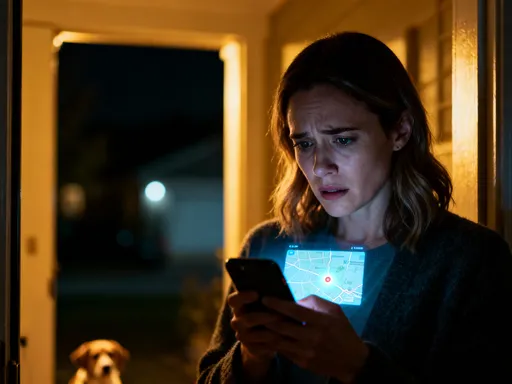
Imagine lying in bed, hearing a quiet rustle at the door, only to find your dog’s collar missing—and your heart sinking. We’ve all been there: that split second when worry takes over. With today’s smart pet trackers, you don’t have to guess if your curious cat wandered too far or if your pup slipped the leash. These small devices bring big peace of mind, turning anxiety into action—calmly, clearly, and in real time. It’s not about treating your pet like a gadget; it’s about giving yourself the gift of knowing, so you can breathe easier and love more fully.
The Moment Everything Changed: A Close Call That Led to a Smarter Solution
I still remember the way my hands shook that night. My golden retriever, Max, had always been curious—just a little too curious. He loved chasing squirrels, following scents, and somehow, that evening, he followed one right out of the yard. The gate had been left unlatched. I didn’t notice until I went to call him in. I stood on the porch, calling his name over and over. No answer. Just silence and the sound of crickets in the dark.
That’s when the panic set in. I grabbed my keys, jumped in the car, and started driving around the neighborhood. I called neighbors. I posted in the local Facebook group. I even walked back through the woods behind our house, flashlight in hand, hoping to catch a glimpse of his golden fur. Two hours passed. My husband was on one side of town, my sister checking nearby parks. I felt helpless—like I’d failed him. And then, just as I was about to call the animal shelter, my phone buzzed. A notification popped up: “Max is 0.3 miles away, moving slowly.”
It wasn’t magic. It was the small tracker I’d clipped to his collar the week before—almost as an afterthought. I’d seen an ad, thought it was a little over the top, but bought it anyway. That night, it led me straight to him. He was sitting by a neighbor’s back porch, looking tired and a little embarrassed, like he knew he’d messed up. I cried when I saw him. Not just because he was safe—but because I hadn’t wasted another minute guessing, wondering, or driving in circles.
That moment changed everything. It wasn’t just about finding Max. It was about realizing how much energy we pour into worry—energy that could be spent on joy, play, and connection. The tracker didn’t replace my love or attention. It just made space for more of it. No more frantic searches. No more sleepless nights. Just the quiet comfort of knowing.
How Pet Trackers Work—Without the Tech Jargon
Let’s be honest—when I first looked into pet trackers, I thought I’d need a degree in engineering to understand them. Terms like GPS, Bluetooth, and real-time location tracking made my eyes glaze over. But here’s the truth: these devices are designed for people like us—people who care more about their pets than about tech specs. You don’t need to be a gadget expert. You just need to care, and that’s enough.
Think of a pet tracker like a tiny guardian that rides on your pet’s collar. It uses signals—kind of like how your phone finds Wi-Fi or GPS—to figure out where your pet is. Some trackers use GPS, which is great for long distances. It’s like having a map that updates every few seconds, so you can see your dog walking down the street or your cat exploring the backyard. Others use Bluetooth, which works best when your pet is close by—say, within a few hundred feet. It’s like a digital leash that pings your phone if your dog gets too far from you during a walk.
And then there are hybrid models that use both, plus Wi-Fi, to give you the most accurate picture possible. The best part? You don’t have to do anything complicated. Once it’s set up, it just works. You open an app on your phone—usually with a simple tap—and there it is: a little dot on a map. That’s your pet. You can see if they’re at home, at the park, or even at a neighbor’s house where they’ve made a new friend.
Some trackers even let you set up safe zones. You draw a circle around your home, and if your pet steps outside it, you get an alert. It’s like a gentle nudge: “Hey, your dog just left the yard.” No more guessing. No more wondering. Just clear, calm information exactly when you need it. And the updates happen in real time—most devices refresh every few seconds, so you’re not looking at old data. You’re seeing what’s happening now.
From Chaos to Calm: Real-Life Moments When the Tracker Helped
I’m not the only one who’s been saved by this little piece of technology. My friend Sarah told me about the time her cat, Luna, disappeared during a thunderstorm. Cats hate loud noises, and Luna bolted when the first clap of thunder hit. Sarah spent an hour searching the house, the garage, under the porch—nowhere. She was about to call the vet when her tracker app buzzed. Luna wasn’t far—she was huddled under a shed three doors down, shaking but safe. Sarah grabbed a towel, walked right to her, and brought her home. No drama. No stress. Just a quiet reunion.
Then there’s Mark, who lives a few streets over. His dog, Buddy, is a Houdini when it comes to leashes. One morning, during a walk, Buddy saw a rabbit and took off. Mark shouted, chased, but lost sight of him fast. Instead of driving around in a panic, he opened his tracker app. Buddy was moving—fast—but the map showed he was heading toward a familiar trail. Mark drove to the end of the path and waited. Ten minutes later, Buddy came trotting out, tail wagging, like nothing had happened. The tracker didn’t just find him—it kept Mark calm enough to think clearly.
These aren’t rare stories. They’re becoming more and more common. The real power of a pet tracker isn’t just in the technology—it’s in the peace it brings. When you’re not running on adrenaline, you can respond with care instead of fear. You don’t have to wake up your kids in the middle of the night to help search. You don’t have to cancel your plans or call in sick. You just act—calmly, confidently, with a clear path forward.
And for pets? It means less stress too. The longer they’re lost, the more scared they get. But when you find them quickly, you reduce that fear. You bring them home before they’ve had time to get too far or too frightened. It’s not just about safety—it’s about kindness. You’re not just a pet owner. You’re a protector, a guide, a calm presence in their world.
Talking to Your Pet—Yes, Really: How Data Builds Understanding
Here’s something I didn’t expect: my tracker didn’t just help me find Max. It helped me understand him. At first, I thought it was just for emergencies. But over time, I started noticing patterns. Like how every Tuesday afternoon, Max would wander down to the corner park. Not run—wander. He’d sit by the big oak tree and watch the kids play. I never knew that. I always thought he just liked long walks. But the tracker showed me his routine, his preferences, his little habits.
And then there’s Bella, my sister’s cat. She’s an indoor-outdoor cat, and they were worried she wasn’t getting enough exercise. But the tracker showed something surprising: Bella was climbing the neighbor’s fence every evening and napping on their sunlit roof. She wasn’t lazy—she was just picky about her napping spots. Once they knew that, they stopped worrying and even added a sunbed to their own porch. Bella now splits her time between both.
This is where tracking goes beyond safety. It becomes a way of listening. Your pet can’t tell you, “I love that shady spot under the maple tree” or “I feel safer when I can see the street from the fence.” But their movements speak. And when you pay attention, you start to see their world through their eyes. You learn when they’re most active, where they feel calm, what makes them curious.
That knowledge changes how you care for them. You might adjust walk times, add new toys in their favorite spots, or even rearrange your yard to make it more inviting. It’s not about controlling them—it’s about understanding them. And that builds trust. When your pet feels seen and known, your bond deepens. You’re not just feeding and walking them. You’re truly connecting.
Setting It Up Together: A Simple Guide Anyone Can Follow
If you’re thinking, “This sounds great, but I’m not tech-savvy,” I get it. I felt the same way. But setting up a pet tracker is easier than most of us expect. Let me walk you through it like we’re sitting at the kitchen table, sipping tea and figuring it out together.
First, you get the tracker. It’s about the size of a thumb drive—light, waterproof, and designed to clip right onto your pet’s collar. No surgery, no complicated installation. Just snap it on. Then, you download the app. It’ll be something simple, like “FindMyPet” or “SafePaw”—names that make sense. You open it, create an account (just email and password), and follow the prompts to pair the tracker with your phone. Most use Bluetooth, so you just hold your phone near the device, and it connects automatically.
I remember my first time. I kept asking, “Is it supposed to beep? Did I do it right?” And then—ping!—it showed up on my phone. Max’s name, a little paw print, and a map. I felt like I’d just performed magic. The app usually walks you through the steps, with clear pictures and simple language. No jargon. No confusion.
Next, you set up your home zone. You open the map, find your house, and draw a circle around it. That’s your safe area. You can make it bigger or smaller depending on your yard. Then, you decide who else should have access. Maybe your spouse, your teenager, or a trusted neighbor. The app lets you share access with a few taps. Now, if Max wanders out, all of you get a notification. No more playing phone tag. No more “Did you see the dog?”
And if you ever wonder how the battery is doing? The app tells you. Most trackers last a few days to a week on a single charge. You plug it in—just like your phone—and it’s ready again in an hour. Some even have low-battery alerts so you’re never caught off guard.
When the Whole Family Stays Calmer—Including Kids
One of the sweetest surprises has been how much calmer my kids are since we started using the tracker. Before, if Max wasn’t in the backyard, my daughter would panic. “Where’s Max? Is he lost? What if he got hit by a car?” Now, she grabs my phone, opens the app, and says, “He’s at Mrs. Thompson’s again. Probably getting treats.” She’s not scared. She’s curious. And that’s a big difference.
For kids, pets are more than animals—they’re best friends, confidants, part of the family. When a pet goes missing, it’s not just stressful for adults. It’s scary for children too. But with a tracker, you can turn that fear into a teaching moment. You show them how technology helps us care for those we love. You teach them about responsibility—“Let’s make sure Max’s tracker is charged”—without the weight of worry.
It also changes how we communicate as a family. Instead of repeating, “I don’t know where the dog is,” we say, “Let’s check the app.” It’s a shared tool, a common language. My son even made a little game out of it—he tracks Max’s walks and tries to guess where he’ll go next. It’s turned anxiety into curiosity, fear into fun.
And for caregivers—like grandparents or babysitters—it’s a relief too. They don’t have to feel responsible for a missing pet. They can check the app, see that everything’s fine, and focus on enjoying time with the animal. It’s one less thing to worry about in a busy household.
More Than a Gadget: Why This Small Change Feels Like a Big Relief
At the end of the day, a pet tracker isn’t about high-tech obsession. It’s about heart. It’s about wanting the best for someone who can’t speak for themselves. It’s about replacing fear with clarity, chaos with calm, and helplessness with action.
I used to think peace of mind was something you just had to wait for—something that came after the storm passed. But I’ve learned it’s something you can build. One small choice at a time. This tracker didn’t change my love for Max. It just made room for more of it. More walks without worry. More playtime without panic. More quiet moments, knowing he’s safe, even when I can’t see him.
And that’s the real gift. Not the technology itself—but what it gives back to us: time, energy, presence. You stop living in “what ifs” and start living in “here and now.” You laugh more. You breathe deeper. You enjoy the little things—like the way your dog curls up at your feet or your cat stretches in a sunbeam—without the shadow of fear.
So if you’ve ever stood in your yard, calling your pet’s name into the dark, know this: you don’t have to do that anymore. There’s a better way. A kinder way. A way that lets you love more and worry less. It’s not about replacing your instincts. It’s about supporting them. And sometimes, the most powerful thing technology can do is help us be more human—more present, more connected, more at peace.