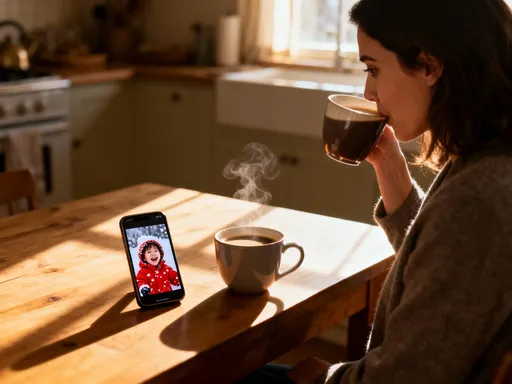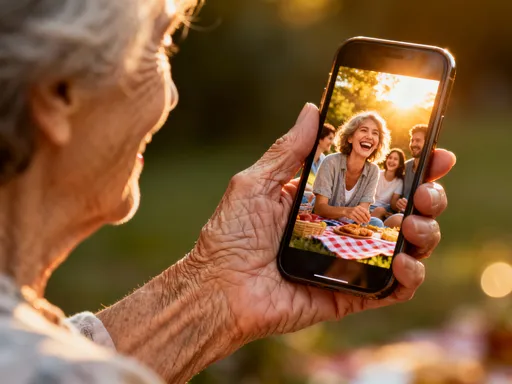
Imagine opening your phone and instantly seeing your child’s first steps, your parents’ anniversary dance, or your grandmother’s laughter on a summer afternoon—clear, organized, and full of emotion. These moments used to fade in dusty albums or lost drives. Now, with simple tools already in your pocket, they can stay vivid for generations. This isn’t about fancy tech—it’s about keeping what matters most close, easy, and alive. And honestly? It’s never been easier to make sure the people you love today are remembered just as beautifully tomorrow.
The Problem: Why So Many Family Memories Disappear
Let’s be real—how many of us have a shoebox full of old photos tucked in a closet? Or a drawer with a mix of printed pictures, expired SD cards, and a camcorder tape from 2003 that no one can play anymore? I’ve been there. Last year, I tried to find a video of my dad teaching my daughter how to ride a bike. I remembered it like it was yesterday—the grass, the giggles, the wobble before she finally got it. But after hours of digging through folders and failed attempts to open ancient file formats, I had to admit: I couldn’t find it. And that broke my heart a little.
You’re not alone. Most families lose precious memories not because they don’t care, but because life gets busy. We snap photos on our phones, take videos at birthday parties, and record funny moments without thinking about what happens next. Then, one day, we realize those files are scattered across devices, buried under screenshots and random downloads. Or worse, they’re on a hard drive that stopped working years ago. Physical photos yellow, get damaged by moisture, or get thrown out during a move. Digital files become inaccessible as technology evolves. The software we used to open them doesn’t exist anymore. The devices that played them are in landfills.
But it’s not just about losing pixels or files. It’s about losing pieces of our story. When a child grows up and can’t hear their grandparent’s voice, that’s not just a missing audio file—that’s a gap in their sense of belonging. When a family gathers for a reunion and no one has the photo from Great-Aunt Clara’s 90th birthday, it’s not just an empty spot in the album—it’s a missed chance to laugh, remember, and feel connected. These aren’t small losses. They’re quiet heartbreaks we carry without even realizing it. And the truth is, most of us don’t plan to lose these moments. We just don’t know how to keep them safe—until now.
The Shift: From Storage to Meaningful Preservation
Here’s the good news: we’re moving past just saving files. We’re learning how to preserve memories in a way that keeps them meaningful. Think about it—what’s more powerful? A folder labeled ‘Family Pics 2018’ or a photo of your son blowing out birthday candles with a caption that says, ‘Jack’s 5th birthday—first time he stayed awake until 9 PM!’ The difference is context. And that’s where technology is changing everything.
Today’s tools don’t just store your photos—they help you tell the story behind them. When you take a picture, your phone automatically records the date, time, and even location. That might sound technical, but it’s actually deeply personal. Knowing that a photo was taken at Grandma’s kitchen table during Thanksgiving 2019 adds warmth and meaning. And now, with just a few taps, you can add even more: names of the people in the photo, a short note about what was happening, or even a voice clip saying, ‘This is when we surprised Mom with the cake she thought we’d forgotten.’
What’s beautiful is how this turns preservation into an act of love. You’re not just organizing files—you’re building a legacy. Imagine your granddaughter, 30 years from now, tapping on a photo and hearing your voice say, ‘This was the summer we finally fixed the porch swing and spent every evening out there, watching fireflies.’ That’s not data. That’s connection. That’s belonging. And the best part? You don’t need to be tech-savvy to do it. Most of this happens automatically, or with just a little effort. The shift isn’t about doing more—it’s about making what you already do count more.
Smart Albums: Letting Technology Do the Heavy Lifting
Let’s talk about one of my favorite quiet miracles of modern tech: smart albums. If you’ve ever opened your phone’s photo app and seen a collection labeled ‘Trip to Lake House’ or ‘Mom and Dad’s Visit,’ you’ve already met this feature. And if you’re like me, you probably smiled and thought, ‘Wait, how did it know?’
Here’s how it works—without getting too geeky. Your phone uses built-in intelligence to recognize faces, locations, and even events. It notices when the same people appear together, when you’re at a familiar place, or when you take a lot of photos in a short time (like at a birthday party). Then, quietly, it groups them into albums. No labels. No spreadsheets. No stress. It’s like having a helpful friend who loves your family almost as much as you do.
And the best part? It respects your privacy. This magic happens right on your device. Your photos don’t need to go to some faraway server. The processing happens locally, so your family moments stay private. You’re in control. You can name the albums, share them, or keep them just for you. I recently found a collection called ‘Dad’s 80th Birthday’—complete with every photo from the backyard party, even the ones my cousin took and forgot to send me. My phone recognized the faces, the location, and the date, and pulled them all together. I cried when I saw it. It wasn’t just a bunch of pictures. It was a story, already told.
And it’s not just for big events. The little moments get noticed too. There’s an album called ‘Morning Coffee with Mom’—just a few photos from our weekly calls, her smiling in her kitchen, sunlight on the table. I didn’t create it. The phone did. And now, every time I open it, I feel close to her, no matter how many miles are between us. That’s the real power of this tech—not the AI, not the algorithms, but the way it helps us feel love, long after the moment has passed.
Voice, Video, and Legacy: Capturing More Than Just Images
A photo shows a face. A video shows movement. But only a voice can carry the sound of laughter, the rhythm of a story, the warmth in a ‘I love you.’ And that’s something no picture can replace. I’ll never forget the first time I played an old voicemail from my grandmother. She had called to say she was baking my favorite cookies. I could hear the oven timer go off, her soft scolding of the dog, and that little chuckle she always had. That 30-second message meant more to me than any photo ever could.
So here’s what I’ve started doing—and what I hope you’ll consider too. I record short voice notes or videos of the people I love. Not long interviews. Just simple, natural moments. I’ll ask my mom, ‘What was your first car like?’ or tell my daughter, ‘Tell Grandma what you learned in school today.’ Then I save them in a private folder, labeled with names and dates. Some I attach to photos. Others I keep in a ‘Family Voices’ album. These aren’t meant for social media. They’re meant for family. For memory. For legacy.
And the tools make it so easy. Most phones have a voice memo app. You can record in your car, in the kitchen, during a walk. No setup. No lighting. Just press record and speak. Then back it up to a secure cloud service so it’s safe even if your phone breaks. I’ve even started a little tradition: on the first Sunday of every month, I ask one family member a simple question—‘What’s your favorite childhood memory?’ or ‘What made you smile this week?’ It doesn’t take long. But over time, these clips become a treasure. They’re not perfect. There’s background noise. Sometimes someone giggles mid-sentence. But that’s what makes them real. That’s what makes them priceless.
Sharing Across Generations: Making Memories a Family Activity
Here’s a thought: what if preserving memories wasn’t just your job? What if it became something your whole family could enjoy together? That’s exactly what’s possible now. With shared digital albums and private family groups, you can invite cousins, siblings, parents, and even grandchildren to view, add to, and relive memories—no matter where they live.
I set up a shared album for my mom’s 75th birthday. I added photos from her childhood, her wedding, family vacations, and silly moments from recent holidays. Then I invited my aunts, uncles, and cousins to contribute. Within days, the album was full of stories. My cousin added a scanned photo of Mom as a teenager, with a note: ‘She thought this was embarrassing, but I always thought she looked like a movie star.’ My niece recorded a video saying, ‘Nana, this is my favorite picture of you because you’re laughing so hard!’ It wasn’t just a slideshow. It was a conversation. It was love, flowing across time and distance.
And think about the younger generation. Kids today grow up with screens, but they don’t always connect them to family history. When they see a curated album of their ancestors—grandparents they never met, great-grandparents they’ve only heard about—it changes how they see themselves. They’re not just kids in a house. They’re part of a story. They belong to something bigger. I watched my nephew, age 8, sit with my dad and go through a digital scrapbook of old family trips. He kept asking, ‘Was Grandpa really scared of the roller coaster? Did Aunt Lisa really wear that hat?’ It sparked questions. It sparked laughter. It sparked connection.
These shared spaces don’t replace family dinners or holiday visits. But they keep the thread alive between them. They give everyone a way to stay close, even when life pulls them apart. And they teach the next generation that remembering isn’t boring—it’s beautiful.
From Now On: Building a Habit That Lasts
Let’s be honest—none of us want one more thing on our to-do list. That’s why the key isn’t doing everything at once. It’s about building small, doable habits that fit into your life. You don’t need to spend weekends scanning old photos. You don’t need to become a digital archivist. You just need to start.
Here’s what works for me: once a month, I pick one event—a birthday, a holiday, a weekend trip—and I spend 15 minutes reviewing the photos and videos. I make sure they’re backed up. I add names and a short note. I might share the album with a few family members. That’s it. Some months I forget. Some months I’m too busy. But most months, I do it. And over time, those small efforts add up to something lasting.
Another simple step? Turn on automatic backup. Most phones and cloud services let you do this with one tap. Once it’s on, your new photos and videos are saved safely, without you lifting a finger. No more panic when your phone dies. No more lost moments. It’s like setting a safety net for your memories.
And don’t worry about perfection. Not every photo needs a story. Not every voice note needs to be saved. Just focus on the moments that matter to you. The ones that make your heart swell. The ones you’d hate to lose. Start there. Do a little. Keep going. Over time, you’ll build something no one else can—a living, breathing record of your family’s love.
The Real Reward: Peace of Mind and Lasting Connection
At the end of the day, this isn’t about technology. It’s about love. It’s about knowing that the people who shaped your life won’t fade from memory. It’s about giving your children a way to know their roots, their history, their belonging. It’s about comfort—on hard days, when you miss someone, you can hear their voice. On happy days, you can relive the joy all over again.
When I think about what I want to leave behind, it’s not money or possessions. It’s moments. It’s laughter. It’s the sound of my daughter’s first words. It’s my mom’s recipe card with flour stains and her handwriting. It’s the video of my husband dancing with our son in the kitchen. These are the things that matter. And now, thanks to simple, thoughtful tech, I know they’ll be safe. Not locked in a box or lost in a folder—but alive. Accessible. Loved.
So if you’ve been putting this off, thinking it’s too hard or too late, I’m here to tell you: it’s not. You don’t need to be a tech expert. You don’t need hours of free time. You just need to care. And if you’re reading this, you already do. Start small. Pick one photo. Add one note. Record one voice clip. Let the tools help you. And trust that what you’re doing isn’t just preserving memories—it’s honoring life. One moment at a time.