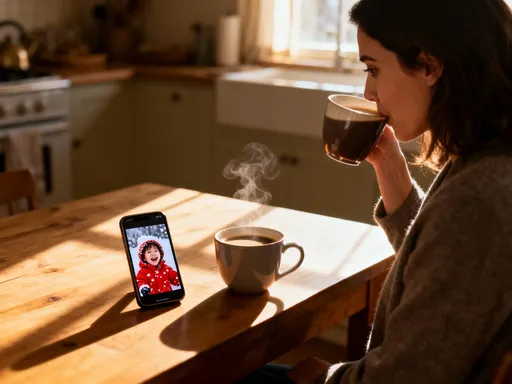
Remember when keeping in touch meant quick texts or the occasional call? For years, my best friend and I drifted—not because we didn’t care, but because life got loud. Then we found something unexpected: an online support group that quietly brought us back together. It wasn’t flashy, just real. We started sharing small wins, tough days, and everything in between. What began as a simple check-in turned into a lifeline. We didn’t plan it. We didn’t even talk about joining the same group on purpose. But slowly, our messages began to mean more. We weren’t just saying “I’m fine.” We were saying, “I’m tired.” “I’m overwhelmed.” “I’m proud of myself today.” And somehow, that changed everything. This is how technology didn’t pull us apart—it pulled us back.
The Slow Drift No One Talks About
Have you ever noticed how friendships don’t always end with a fight? Sometimes, they just… fade. Not because anyone did anything wrong, but because life fills up. I remember my best friend Sarah and I used to talk every single day. We’d call during lunch breaks, send voice notes while folding laundry, and text late into the night about everything from parenting meltdowns to what we’d make for dinner. But then, things shifted. Her youngest started kindergarten. I took on a new role at work. We both stopped going out as much. And the calls got shorter. The texts went unanswered for days. I’d see her name pop up and feel a little knot in my chest—like I’d missed something important, but didn’t know how to fix it.
We weren’t alone. So many of us are living full lives, but feeling quietly lonely. A 2020 study from Cigna showed that nearly half of adults in the U.S. reported sometimes or always feeling alone. And it’s not just about being physically isolated. It’s about emotional distance—when the people you love feel far away, even if they’re only a text away. The sad truth? We often don’t know how to start the conversation again. “Hey, I miss you” feels too heavy. “How are you?” feels too light. And so, we say nothing. We wait. We hope. We drift.
But here’s what I’ve learned: that silence isn’t a sign of failure. It’s a sign of being human in a world that never slows down. Sarah and I didn’t stop caring. We just stopped knowing how to show it in the middle of everything else. We were both tired. We were both trying to do too much. And we both assumed the other person was too busy to talk. That assumption? It was the real problem. Not the lack of time, but the lack of a safe, low-pressure way to reconnect. And that’s exactly what we found—not in a phone call, not in a coffee date we’d both reschedule—but online.
Finding a Space Where We Could Be Real
I didn’t join an online support group looking to fix my friendship. I joined because I was struggling. I was feeling overwhelmed—like I was doing everything “right” but still falling short. One night, after my kids were in bed and the dishes were done, I found myself scrolling through a parenting forum. Someone had posted: “Does anyone else feel like they’re faking it every single day?” And suddenly, I wasn’t alone. Dozens of women shared their stories—about anxiety, guilt, exhaustion, joy, love. It wasn’t performative. No filters. No curated photos. Just real people saying, “Me too.”
That’s when I found the group. It wasn’t a public forum, but a private, invitation-only space focused on emotional well-being for women in midlife. No pressure to post. No judgment if you disappeared for a week. Just a place to show up as you are. I signed up quietly, not telling anyone. And then, one morning, I saw a notification: Sarah had joined too. Not because I invited her. Not because we planned it. But because she was looking for the same thing—connection without the weight of expectation.
What made this space different from regular social media? Everything. On Instagram, I see highlight reels—vacations, perfect meals, smiling kids. But here? I read things like, “Today I cried in the car because my son forgot his lunch again and I forgot mine.” Or, “I haven’t showered in two days, and I’m proud I got dinner on the table.” The tone wasn’t about fixing or fixing others. It was about witnessing. And when Sarah started posting—short, honest updates about her stress, her marriage, her mom’s health—I didn’t feel the need to cheerlead. I just replied, “That sounds really hard.” And she wrote back, “Thank you for seeing me.”
This wasn’t therapy. It wasn’t even a friendship reboot. It was something softer, more organic. We weren’t trying to catch up. We were just… showing up. And slowly, the distance between us began to close—not because we talked more, but because we talked differently.
How Technology Made Vulnerability Easier
Let’s be honest: being vulnerable face-to-face can be scary. Even with someone you’ve known for years. There’s something about looking someone in the eye and saying, “I’m not okay,” that feels heavy. I’ve tried it—starting a hard conversation over coffee, only to back away when I saw the concern in their face. “I’m fine,” I’d say, forcing a smile. “Just tired.” But online? Typing a message at 11 p.m., after the house was quiet? That felt different. Safer. I could take my time. I could edit. I could say exactly what I meant—without fear of breaking down or making someone else uncomfortable.
The group used a simple platform—just text-based posts, private replies, and weekly prompts like “What’s one thing you’re proud of this week?” or “What’s weighing on your heart right now?” No videos. No live chats. Just words on a screen. And that simplicity made all the difference. Sarah once wrote, “I feel invisible at home. Like I’m the glue holding everything together, but no one sees me.” I read that and cried. And then I typed back, “I see you.” Two words. But they mattered.
Technology didn’t make us more emotional. It gave us the space to be emotional without pressure. The asynchronous nature meant we could respond when we were ready—not when the conversation demanded it. I didn’t have to drop everything to comfort her. She didn’t have to perform strength for me. We could be real, in our own time. And over time, those small, honest exchanges built a new kind of intimacy—one that didn’t rely on constant contact, but on consistent truth.
One feature that helped was the shared journal. We could write private entries and choose to share them with specific people. I started writing mine weekly, and eventually shared one with Sarah. It was about feeling stuck in my career, afraid to make a change. She replied with her own story—how she’d left a job years ago and rebuilt her confidence slowly. Her words didn’t fix my problem, but they made me feel less alone. And that, I’ve learned, is often enough.
From Passive Chats to Active Support
Remember those old text threads? “How are you?” “Fine. You?” “Good.” End of conversation. We all know them. They’re polite. They’re safe. But they don’t build connection. What changed in the group was the depth of our responses. When Sarah posted, “I’m completely burned out this week,” I didn’t say, “Hang in there.” I said, “That sounds exhausting. What’s been the hardest part?” And she told me—her dad’s health, her teenage daughter’s struggles, her own sleepless nights. I didn’t offer advice. I just listened. And then I said, “You’re carrying so much. I’m here with you.”
That shift—from small talk to soul talk—didn’t happen overnight. But the structure of the group made it easier. The prompts encouraged depth. The anonymity of the larger group (we were one of many pairs reconnecting) took the pressure off. And the fact that everyone was encouraged to respond with empathy—not solutions—changed the tone. We weren’t fixing each other. We were holding space for each other.
One week, I posted about feeling guilty for wanting more from life—more creativity, more purpose, more joy. I didn’t expect a big reaction. But Sarah replied, “I’ve felt that exact same way. It’s not selfish. It’s human.” Her words stayed with me. They gave me permission to want more. And when she later shared that she’d signed up for a painting class—something she hadn’t done since college—I replied, “That’s so brave. I’m so proud of you.” We weren’t just friends anymore. We were each other’s quiet cheerleaders. And that made all the difference.
The beauty of this kind of support is that it’s not dramatic. There were no grand declarations. No emergency calls at 2 a.m. Just steady, quiet presence. And in a world that glorifies busy-ness and perfection, that kind of steady presence is rare. It’s also powerful. Because when you know someone is really listening—when you know they see you, not just your smile—you start to believe you matter. And that belief? It changes everything.
Building Rituals in a Digital Space
One of the biggest lessons I’ve learned is that connection doesn’t have to be big to be meaningful. We don’t need monthly dinners or weekend trips to stay close. What we need are small, consistent rituals—tiny threads of care that weave through our days. In the group, Sarah and I created a few of these. Every Sunday night, I post a gratitude note: three small things that went well. Sometimes it’s “the kids laughed at breakfast,” or “I finished a book,” or “the sun was warm on my face.” Sarah started doing the same. We don’t always comment on each other’s posts, but when we do, it’s with warmth. “So happy for you,” or “That made me smile.”
We also began a tradition of celebrating “tiny victories.” Lost a few pounds? Posted about it. Got through a tough meeting? Shared it. Even “I drank enough water today” became a win. At first, it felt silly. But over time, it became sacred. These weren’t bragging rights. They were proof that we were trying. That we were growing. That we were paying attention to ourselves.
Another ritual: the “digital high-five.” When one of us shares a struggle, the other responds with a simple emoji—a raised hand, a heart, a star. It’s not much, but it says, “I see you. I’m with you.” And sometimes, that’s all we need. These small habits didn’t take time out of our day. They fit into the margins—the five minutes before bed, the quiet moment with coffee. But they kept us emotionally in sync. We weren’t just sharing updates. We were building a new rhythm of friendship—one that worked for our lives, not against them.
And here’s the thing: these rituals didn’t replace our in-person time. When we finally met for coffee after months, it didn’t feel awkward. It felt natural. Because we’d already been close. We’d already been talking. The digital space hadn’t kept us apart—it had kept us connected, so the real-world moments could be richer, deeper, more relaxed.
When Life Happened, We Were Already Connected
Then came the phone call. Sarah’s mom had been hospitalized. Nothing life-threatening, but serious enough to shake her. I got the message late at night—a simple post in the group: “Mom’s in the hospital. I’m scared.” I read it and my heart dropped. But I didn’t panic. Because we’d already been talking. I already knew how much her mom meant to her. I already knew how hard she’d been working to balance caregiving with her own family. I didn’t need to re-establish closeness. I was already close.
I sent her a voice message—just a few minutes long. “I’m so sorry you’re going through this. I’m holding you in my heart. Let me know if you want to talk, or if you need help with the kids, or if you just need silence. I’m here.” She called me the next morning. We didn’t rush. We didn’t try to fix it. We just talked. And cried. And sat in the quiet together. It was one of the most meaningful conversations we’d ever had.
That’s when I realized the true value of what we’d built. The group hadn’t just helped us stay in touch. It had prepared us to be there for each other—truly, deeply—when life got hard. We didn’t have to rebuild trust. We didn’t have to explain how we felt. We were already emotionally present. The ongoing, low-stakes connection had created a reservoir of care that we could draw from when we needed it most.
And it wasn’t just for crises. When I got a promotion at work, Sarah was the first to know—not because I texted her, but because I posted it in the group. Her comment? “I always knew you could do this. So proud of you.” Simple. But it meant everything. Because it came from a place of real knowing—not just surface-level friendship, but deep, consistent attention.
Why This Might Be the Future of Friendship
I used to think technology was the enemy of real connection. That screens kept us apart. That we needed to unplug to truly reconnect. But my experience with Sarah has changed my mind. Technology didn’t come between us. It gave us a new way to be together—one that honored our busy lives, our emotional needs, and our desire for authenticity. Online support groups aren’t just for strangers. They can be lifelines for old friendships that have lost their rhythm.
For anyone missing a friend but unsure how to reach out, this might be the gentlest path forward. You don’t have to plan a reunion. You don’t have to have a big conversation. You can just show up—in a shared space, with honesty and openness. You can say, “I’m not okay,” and know you’ll be met with kindness. You can celebrate small wins and be truly seen. And over time, you can rebuild what was lost—not by going backward, but by moving forward in a new way.
This isn’t about replacing in-person connection. It’s about enriching it. It’s about creating emotional continuity so that when life happens, you’re not starting from scratch. It’s about using technology not to distract, but to deepen. Because sometimes, the most human thing we can do is say, “I’m here,” and mean it. And sometimes, the best way to say it is through a screen, at midnight, in a quiet moment, to someone who’s been walking a similar path all along.
Friendship doesn’t have to be perfect. It doesn’t have to be constant. But it can be real. And if you’re willing to try a new way, it might just find its way back to you—when you least expect it, and most need it.