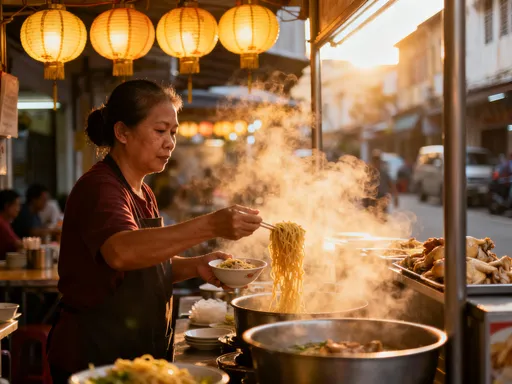
You know that feeling when a city just gets you? Istanbul didn’t just welcome me—it spoke through its food. Every bite of spiced lamb, every swirl of saffron tea, felt like a brushstroke on a centuries-old canvas. This isn’t just about eating; it’s about tasting art, history, and culture in every dish. From the golden domes of Hagia Sophia to the wooden houses perched above the Bosphorus, Istanbul is a city of layers. And nowhere is that depth more vividly revealed than on its plates. I never expected my taste buds to become my best tour guide, but in Istanbul, they led me straight to the soul of the city.
The Pulse of the City: Food as Istanbul’s Living Culture
Istanbul’s cuisine is not merely a collection of recipes—it is a living, breathing chronicle of empires, migrations, and everyday life. More than sustenance, food in this city functions as a cultural heartbeat, pulsing through its cobblestone alleys and modern boulevards alike. The flavors here are not accidental; they are the result of centuries of convergence. Byzantine traditions mingled with Persian sophistication, Arab spices, and Central Asian nomadic techniques to form a culinary identity that is both deeply rooted and constantly evolving. In Istanbul, every meal carries the weight of history, yet feels vibrantly present.
Nowhere is this more evident than in the city’s markets, where the past and present collide in a riot of color, scent, and sound. The Spice Bazaar, officially known as the Egyptian Bazaar, is more than a tourist destination—it is a sensory archive. As sunlight filters through its domed ceiling, the air fills with the warm earthiness of cumin, the citrus tang of sumac, and the delicate perfume of dried rose petals. These are not just ingredients; they are echoes of the Silk Road, remnants of trade routes that once connected Istanbul to distant lands. Vendors in crisp white aprons weigh saffron threads by hand, their movements precise and reverent, as if measuring not grams but centuries of tradition.
But the true rhythm of Istanbul’s food culture unfolds in its neighborhoods, far from the well-trodden tourist paths. In Kadıköy, on the Asian side of the city, fishermen unload their morning catch directly onto the docks, where small grills are already sizzling. The smell of charred mackerel rises with the morning mist, mingling with the aroma of fresh bread from nearby bakeries. Women in floral aprons knead dough for börek in home kitchens, their hands moving with the ease of generations. The call to prayer echoes over rooftops where kebabs turn slowly on vertical spits, their fat dripping into open flames. These moments are not staged for visitors—they are the quiet, daily rituals that sustain the city’s soul.
Flavors with a Brushstroke: Culinary Arts as Cultural Expression
In Istanbul, cooking is not simply a domestic chore—it is an art form, one that shares deep affinities with the city’s visual and decorative traditions. Just as miniature painters once labored over intricate details in Ottoman manuscripts, so too do cooks balance color, texture, and harmony in their dishes. The kitchen, in this sense, becomes a studio, and the plate a canvas. Each element is placed with intention: a garnish of pomegranate seeds like flecks of crimson paint, a swirl of yogurt drizzle resembling calligraphic strokes, a dusting of paprika echoing the hues of Iznik tiles.
Consider *hünkar beğendi*, or “the sultan’s delight,” a dish that embodies this artistic sensibility. Tender cubes of lamb simmered in a rich tomato sauce are served atop a bed of smoky eggplant purée, itself infused with just enough butter to glisten under the light. The name alone speaks to its royal origins—this was once a favorite of Ottoman sultans, prepared in the palace kitchens of Topkapı. But beyond its regal pedigree, the dish exemplifies the Turkish ideal of balance: richness tempered by smoke, tenderness contrasted with depth, simplicity elevated by technique. It is not merely nourishing; it is a masterpiece meant to be admired before it is consumed.
This reverence for presentation extends beyond the food itself to the vessels that carry it. In the historic district of Çanakkale, artisans still hand-paint ceramic plates using methods passed down for generations. Their designs—featuring tulips, carnations, and cypress trees—mirror the motifs found in Ottoman textiles and tilework. When a traveler dines from one of these plates in a family home or a seaside meyhane, they are not just eating; they are participating in a centuries-old aesthetic tradition. The meal becomes a multisensory experience, where taste, sight, and touch converge in a single, harmonious act.
From Street Stalls to Palaces: The Geography of Taste
To understand Istanbul’s culinary landscape is to navigate its geography with intention. Each neighborhood offers a distinct flavor profile, shaped by its history, demographics, and proximity to water, markets, or trade routes. The city’s duality—straddling Europe and Asia, tradition and modernity—manifests clearly in its food. To eat your way through Istanbul is to take a journey through time and space, one bite at a time.
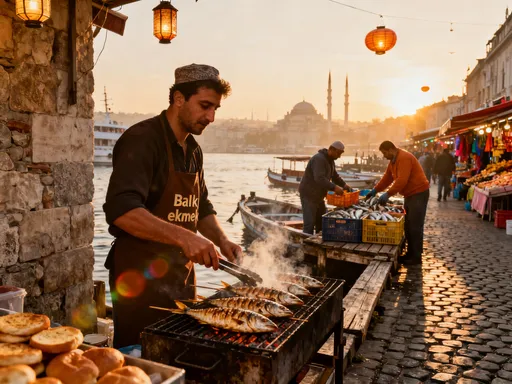
Begin in Eminönü, where the scent of grilled fish leads you to the wooden boats moored along the Galata Bridge. Here, *balık ekmek*—simple fish sandwiches stuffed with onions, lettuce, and a squeeze of lemon—are grilled fresh over open flames. The fishermen themselves prepare them, their hands calloused but skilled, their movements efficient. Eating one on the edge of the water, watching ferries glide across the Golden Horn, is one of Istanbul’s most authentic experiences. There is no table, no menu—just the immediacy of fresh catch and the rhythm of the sea.
Contrast this with the refined atmosphere of Sultanahmet, where centuries-old architecture sets the stage for more formal dining. Restaurants tucked into restored Ottoman houses serve dishes like stuffed grape leaves, slow-cooked lamb, and delicate pastries dusted with powdered sugar. The pace is slower, the presentation more deliberate. Yet even here, the connection to everyday life remains. Families gather for weekend lunches, elders sip çay from tulip-shaped glasses, and children sneak bites of baklava when they think no one is looking.
On the other side of the Bosphorus, Beşiktaş buzzes with a different energy. Trendy cafés line the waterfront, serving artisanal coffee and avocado toast to university students and young professionals. Yet just a few streets inland, traditional *sabah kahvaltı* (breakfast) tables are laid out in cozy eateries, laden with olives, cheeses, honeycomb, and menemen—a fluffy scramble of eggs, tomatoes, and peppers. Meanwhile, in Fatih, the heart of old Istanbul, family-run meyhanes (taverns) open their doors in the evening, filling with the clink of raki glasses and the hum of conversation. Each district tells its own story through food, and the traveler who moves between them begins to understand the city’s complexity.
Hands in the Dough: Experiencing Culture Through Cooking
No amount of sightseeing can match the intimacy of sharing a meal you’ve helped prepare. In Üsküdar, a quiet neighborhood on the Asian shore, I joined a local family for a home-cooking session that became one of the most meaningful experiences of my journey. The matriarch, Nermin Hanım, welcomed me with a warm smile and an apron already tied around her waist. We gathered around the kitchen table, where a mound of dough awaited transformation into *mantı*—tiny Turkish dumplings often called “miniature ravioli.”
As we rolled and folded the dough, Nermin Hanım shared stories of her childhood in Anatolia, of learning to make mantı from her grandmother, of wedding feasts where hundreds of dumplings were prepared by hand. The rhythmic motion of folding each piece—just large enough to hold a pinch of spiced lamb—felt meditative, almost sacred. When the mantı were boiled and served with garlic yogurt and a drizzle of melted butter infused with paprika, the taste was deeply satisfying, but it was the memory of making them together that lingered longest.
This kind of immersive experience is increasingly available to travelers through community-run cooking workshops. Unlike commercial classes, these are often hosted in private homes and led by women who view cooking as an act of cultural preservation. They teach not just recipes, but values—hospitality, patience, generosity. Participants learn how to balance flavors without measuring spoons, how to tell when dough is ready by touch, and how to serve with pride. For many, it is a rare opportunity to connect with locals on a human level, beyond the transactional nature of tourism.
For those seeking such experiences, the key is finding reputable programs that prioritize authenticity and sustainability. Look for initiatives supported by local NGOs or cultural foundations, where a portion of proceeds supports women’s cooperatives or culinary preservation efforts. These classes are not about performance; they are about participation. And in a world where travel can sometimes feel superficial, they offer a rare depth of connection.
The Rhythm of the Table: Mealtimes as Social Art
In Istanbul, the dining table—known as *sofra*—is far more than a piece of furniture. It is a sacred space, a stage for connection, storytelling, and celebration. Meals here unfold slowly, almost ceremonially, following a rhythm that feels both structured and spontaneous. A traditional dinner might begin with a spread of meze—small plates of eggplant salad, stuffed peppers, hummus, and marinated vegetables—followed by grilled fish or meat, then fresh salad, rice or bulgur pilaf, and finally, a sweet finish like künefe or milk pudding. Each course is not rushed but savored, allowing conversation to flow and relationships to deepen.
One evening in Beyoğlu, I found myself in a lively meyhane where the air was thick with laughter and the scent of grilled liver. Long wooden tables were crowded with friends and families, their raki glasses filled with the anise-flavored spirit that turns milky white when water is added. In the corner, a small ensemble played *fasıl* music—traditional Ottoman chamber music—with a violin, kanun, and ney flute. As the night progressed, diners clapped along, some even rising to dance. The meal was no longer just about food; it had become a performance, a shared ritual that blurred the lines between dining and celebration.
This emphasis on communal eating reflects a broader cultural value: the belief that food is meant to be shared. In Turkish households, it is common for multiple generations to gather around the sofra, elders offering wisdom while children sneak extra pieces of simit. Even in casual settings, strangers at adjacent tables might exchange bites of their dishes or offer a compliment on each other’s choices. This culture of generosity extends to visitors—refusing a second helping is often seen not as politeness but as a slight. To eat in Istanbul is to be welcomed, included, and made part of something greater than oneself.
Beyond the Plate: Food-Inspired Art and Craft
The influence of food in Istanbul extends far beyond the kitchen. In galleries and studios across the city, artists are drawing inspiration from the textures, colors, and rituals of Turkish cuisine. In Karaköy, a former warehouse district turned creative hub, I visited a contemporary art installation composed entirely of dried peppers, olive oil bottles, and pomegranate seeds arranged in intricate geometric patterns. The work, titled *Ancestral Pantry*, invited viewers to reflect on the ways food connects us to memory, place, and identity.
Elsewhere, ceramicists are reimagining traditional tableware with modern sensibilities. In a sunlit studio in Kütahya—one of Turkey’s historic centers of pottery—a young artist demonstrated how she uses cobalt blue and cinnabar red to recreate Iznik designs on hand-thrown plates. “These colors are not arbitrary,” she explained. “They come from the earth, just like the food we eat.” Her pieces are not meant for museums but for daily use, designed to enhance the experience of eating by honoring the beauty of the ordinary.
Even fashion designers are incorporating culinary motifs into their work. A recent collection in Istanbul featured silk scarves printed with patterns inspired by spice blends—turmeric swirls, cinnamon spirals, sumac dots. Wearing them, one reviewer noted, felt like carrying a piece of the kitchen into the world. These creative expressions reveal a deeper truth: in Istanbul, nourishment is not limited to the body. It feeds the imagination, inspires innovation, and sustains cultural continuity.
Savoring the Journey: How to Eat Like You Belong
To eat in Istanbul is to engage in a form of cultural dialogue. But like any conversation, it requires respect, patience, and presence. The most meaningful culinary experiences are not found in guidebook highlights but in quiet moments of connection—accepting a cup of tea from a shopkeeper, learning to say *afiyet olsun* (a blessing said before eating), or sitting long after a meal simply to talk. These gestures, small as they may seem, signal a willingness to participate rather than observe.
Travelers can deepen their experience by aligning their visits with seasonal rhythms. In summer, fresh mulberries spill from roadside stands, their deep purple juice staining fingers and lips. Autumn brings pomegranates, their jewel-like seeds used in salads, sauces, and desserts. Winter is the season for pomegranate molasses, a tart syrup that adds depth to stews and marinades. And during Ramadan, the streets come alive at sunset with the serving of *iftar*, when families break their fast with dates, soup, and sweets like *lokma*—golden fried dough soaked in syrup. Participating in these traditions, even as a guest, fosters a sense of belonging.
Equally important is the pace at which one eats. In Istanbul, meals are not rushed. They are events to be lingered over, conversations to be savored as much as the food. Sitting for hours over tea and dessert is not indulgence—it is normal. By slowing down, travelers open themselves to the unexpected: a story from a waiter, a song from a street musician, a shared smile with a stranger at the next table. These are the moments that transform a trip into a transformation.
Istanbul’s cuisine is not a tourist attraction to be checked off a list. It is a living tradition, a bridge between past and present, a language spoken through scent, taste, and touch. To approach it with reverence—to eat not just with curiosity but with gratitude—is to truly understand the city. So come with an open heart, a willing palate, and the humility to learn. Let the flavors guide you. Let the table welcome you. And let Istanbul, through its food, speak directly to your soul.