Most people think Santorini is just whitewashed houses and blue domes—but I stumbled on something wild. While hiking off the tourist trails, I found jagged volcanic cliffs, surreal rock formations, and sea caves carved by ancient eruptions. This island isn’t just pretty—it’s geologically mind-blowing. If you’ve only seen the postcard spots, you’re missing the real drama beneath the surface. Let me take you where most travelers never go.
Beyond the Postcard: Santorini’s Secret Geological Soul
Santorini is often celebrated for its postcard-perfect villages clinging to the edge of a vast caldera, their white-washed walls glowing under the Aegean sun. Yet beneath this iconic beauty lies a far more powerful story—one of fire, explosion, and rebirth. The island’s dramatic cliffs are not merely scenic backdrops; they are the exposed wounds of one of the most cataclysmic volcanic events in human history. Around 1600 BCE, the Minoan eruption tore the center of the island apart, collapsing the volcano into itself and forming the immense caldera that defines Santorini today. This event was so powerful that it likely influenced ancient myths, including the legend of Atlantis, and reshaped civilizations across the eastern Mediterranean.
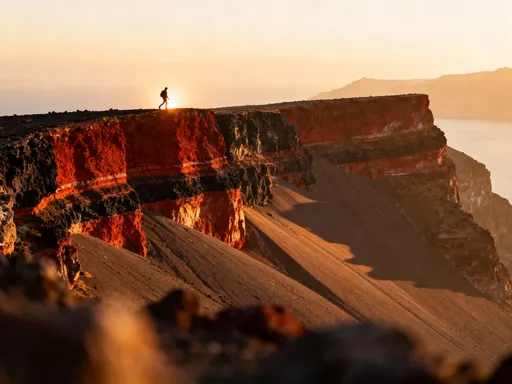
While millions visit each year to admire the sunsets over the caldera, few pause to consider what they’re actually looking at: a geological scar, still active and deeply dynamic. The towering cliffs that rise hundreds of feet above the sea are not solid rock but layered archives of volcanic history. Each stratum tells a story—of ashfall, lava flows, and pyroclastic surges that built and destroyed the island over millennia. The black, red, and ochre bands visible along the edges are not decorative; they are the preserved remains of eruptions spanning more than half a million years. This is not a static landscape, but one shaped by ongoing tectonic forces, with seismic activity still monitored closely by scientists.
Understanding this transforms the way one experiences Santorini. Instead of seeing only beauty, the observant traveler begins to recognize power—the kind that can level cities and create islands from the sea. It’s a humbling perspective, one that invites deeper respect for the natural world. The island’s charm is not just in its aesthetic perfection, but in its raw, untamed origins. For those willing to look beyond the balconies and bougainvillea, Santorini offers a rare chance to walk through time, to touch the forces that shaped not only the land but the course of human history.
The Caldera’s Hidden Layers: A Hiker’s Perspective
While the northern caldera rim draws crowds for its panoramic views, the southern and eastern flanks of the volcano reveal a different kind of wonder—one best discovered on foot. The trail from Megalochori toward Profitis Ilias, the island’s highest peak, offers an intimate encounter with Santorini’s geological layers. As you leave the village behind, the paved road gives way to a dusty path that winds through sunbaked slopes and ancient vineyards trained into low baskets. But it’s the rock itself that commands attention. Here, the cliffs are not hidden behind whitewashed buildings but stand fully exposed, their colorful bands rising like pages in an open book.
Walking this route, you can see how each layer represents a distinct volcanic episode. The deep red strata are remnants of iron-rich lava flows, hardened and oxidized over time. Above them, soft layers of pumice—light as foam—were once superheated ash blasted into the sky during explosive eruptions. Further up, black basaltic rock marks quieter periods of lava outpouring, while streaks of gray indicate tephra deposits from later events. These layers are not uniform; they twist, tilt, and fold, warped by the immense pressures beneath the Earth’s surface. Geologists call this the Cape Colombo sequence, one of the most complete volcanic records in the Mediterranean.
The sensory experience enhances the journey. Underfoot, the trail crunches with volcanic gravel, sharp and porous. In sheltered spots, a faint scent of sulfur lingers in the air, a reminder that the volcano is not extinct, only resting. As the sun begins to dip, the light transforms the cliffs into a living canvas—golden rays strike the striations at sharp angles, making the colors glow as if lit from within. At this hour, shadows stretch long across the path, and the breeze carries the distant chime of goat bells from nearby hillsides. It’s a moment of quiet awe, where the landscape feels both ancient and alive.
What makes this hike especially meaningful is its accessibility. No technical skill is required, yet the rewards are profound. Families, couples, and solo travelers alike can walk this path and come away with a deeper understanding of the island. Local guides often lead small groups along this route, pointing out specific formations and explaining their significance. For the curious mind, it’s an open-air classroom where science and beauty converge.
Sea Caves and Lava Tunnels: Nature’s Underground Gallery
At sea level, the forces that shaped Santorini continue to sculpt the coastline in quieter, more intimate ways. Along the southern shores, particularly near Akrotiri, wave action has carved a network of sea caves, arches, and grottos into the volcanic rock. These formations are not just scenic—they are geological records, revealing the hardness and composition of the lava flows that once surged toward the ocean. Basalt columns, formed by the slow cooling of dense lava, stand like pillars in some caves, their hexagonal shapes a testament to nature’s precision. In others, smooth, glassy walls reflect the turquoise water, creating an almost otherworldly glow.
One of the most striking features is the presence of lava tubes—natural tunnels created when the surface of a lava flow hardened while molten rock continued to move beneath. Though many remain unstable and closed to the public, some have been safely accessed through guided boat tours that navigate the island’s less-visited coves. These excursions often depart from Ammoudi Bay or the southern tip near Akrotiri Lighthouse, offering a perspective few tourists experience. As the boat glides into a narrow cave, sunlight filters through from above or bounces off the water, illuminating ceilings streaked with mineral deposits and walls polished by centuries of tides.
The experience is both serene and surreal. Inside these grottos, sound changes—the echo of waves becomes a soft rhythm, and voices are hushed by the stone. Some caves are large enough to enter by kayak or paddleboard, allowing visitors to explore at their own pace. Others remain hidden, accessible only at low tide or by knowledgeable locals who know the safest routes. Responsible access is crucial; these formations are fragile, and increased tourism has led to erosion and damage in some areas. Operators who prioritize sustainability often limit group sizes and avoid anchoring on sensitive seabeds.
For families, these tours offer an engaging way to learn about geology without stepping into a museum. Children marvel at the colors and shapes, while adults appreciate the science behind them. Some boats even include naturalists or geology enthusiasts who explain how the caves formed and what they reveal about Santorini’s volcanic past. Floating in a sea cave, surrounded by rock that was once molten fire, creates a rare sense of connection—to the Earth, to time, and to the quiet power of natural processes.
Akrotiri’s Volcanic Landscape: Where History Meets Geology
Just a short walk from the sea caves lies one of the most remarkable archaeological sites in the Mediterranean: Akrotiri, a Minoan Bronze Age settlement preserved under layers of volcanic ash. Unlike Pompeii, which was buried by a single eruption, Akrotiri was entombed by the same event that reshaped Santorini—the Minoan eruption. The ash that buried the town also protected it, leaving behind multi-story buildings, intricate frescoes, and even ancient drainage systems intact. But what makes Akrotiri truly unique is how its preservation is inseparable from the island’s geology.
The site sits on a high plateau, shielded by the very cliffs that were formed during earlier eruptions. As you walk the elevated pathways, you can see the thick layers of pumice and ash beneath the wooden walkways—some several meters deep. These deposits are not just background; they are the reason the buildings didn’t collapse. The fine ash filled the rooms gradually, supporting walls and roofs rather than crushing them. It’s a rare example of destruction leading to preservation, where catastrophe became a time capsule.
The on-site museum and exhibition center display artifacts that reveal the eruption’s intensity. Fossilized wood shows signs of charring, and pottery fragments are warped by extreme heat, their shapes softened as if melted. These objects are not just relics of daily life but physical evidence of the volcano’s power. One display shows a loaf of bread carbonized in the ash—baked not in an oven, but in the blast of a pyroclastic flow. It’s a haunting reminder of how quickly life was interrupted.
For visitors, Akrotiri offers more than history—it offers perspective. Standing in a town frozen in time, surrounded by the same rock layers that buried it, creates a deep sense of continuity. The same forces that created the cliffs, the caves, and the caldera also shaped human civilization on this island. It’s a place where geology and archaeology converge, where the Earth’s story is written in both stone and culture. Families often spend hours here, children peering into reconstructed rooms while adults reflect on the fragility and resilience of human life.
Exploring the Red Beach and Its Fragile Beauty
No discussion of Santorini’s geology is complete without mentioning the Red Beach, one of the island’s most photographed natural wonders. Located just below the ancient site of Akrotiri, the beach is named for its striking crimson cliffs, formed from iron-rich volcanic lava that oxidized over time, creating a deep rust-red hue. The contrast between the red rock, black pebbles, and turquoise sea is breathtaking—a landscape that feels almost Martian in its intensity. For decades, it has drawn photographers, hikers, and sunbathers seeking a dramatic coastal experience.
Yet this beauty comes with a cost. The very forces that created the Red Beach also make it unstable. Rockfalls are common, and the cliffs continue to erode due to wind, rain, and the weight of visitors walking near the edges. In recent years, authorities have restricted access to certain areas, and guided tours now emphasize staying on marked paths. In 2019, part of the cliff collapsed, underscoring the need for caution. While the beach remains open, it serves as a powerful example of how natural wonders require protection.
For responsible travelers, the solution is not to avoid the site, but to visit with awareness. Going early in the morning or late in the afternoon not only avoids the heat and crowds but also offers the best light for photography. Wearing sturdy shoes is essential, as the path down is steep and loose. More importantly, visitors are encouraged to take nothing and leave nothing—no souvenirs from the rock, no litter, no disturbance to the fragile ecosystem.
For those seeking similar beauty without the environmental strain, nearby alternatives exist. A short hike east along the coast leads to quieter coves with equally dramatic red and black rock formations. These spots, less known and unmarked on most tourist maps, offer solitude and stunning views without contributing to overcrowding. They may lack the fame of Red Beach, but they provide a more authentic connection to the landscape—one that honors both its beauty and its vulnerability.
Practical Tips for Off-the-Beaten-Path Geological Exploration
Exploring Santorini’s hidden geological wonders requires preparation, respect, and a spirit of curiosity. The island’s terrain is rugged and exposed, with little shade and uneven paths. To make the most of your journey, timing is essential. Early mornings and late afternoons are ideal for hiking—temperatures are cooler, light is softer, and trails are less crowded. Midday sun can be intense, especially in summer, so planning activities around the heat is not just comfortable but safer.
Footwear matters. Sturdy hiking shoes with good grip are recommended for any trail that leaves the paved roads. The volcanic rock can be slippery, and loose gravel increases the risk of falls. Sun protection is equally important: a wide-brimmed hat, UV-blocking sunglasses, and sunscreen are essential. Carrying at least two liters of water per person ensures hydration, especially on longer hikes like the Fira to Oia route or the ascent to Profitis Ilias.
For those unfamiliar with the terrain, hiring a local guide who specializes in geology or nature walks can transform the experience. These guides not only ensure safety but provide context—explaining rock formations, identifying plant life adapted to volcanic soil, and sharing stories of the island’s history. Many operate small, eco-conscious tours that prioritize sustainability and small group sizes. Some even collaborate with geologists or environmental educators to offer in-depth excursions.
Combining geological exploration with cultural experiences enriches the journey. After a morning hike, stopping in a village like Pyrgos or Megalochori for a coffee or a meal allows travelers to connect with local life. Family-run tavernas often use ingredients grown in volcanic soil—tomatoes, capers, and fava beans known for their rich flavor. These moments ground the adventure in daily reality, reminding visitors that people have lived in harmony with this dynamic landscape for generations.
Finally, the most important tip is respect. The cliffs, caves, and beaches are not just backdrops for photos—they are living parts of an active geological system. Staying on marked trails, avoiding unstable areas, and leaving no trace are small actions that preserve the island for future visitors. When we treat nature with care, we deepen our own experience and honor the forces that shaped this extraordinary place.
Why Seeing Santorini’s Terrain Changes Everything
Traveling to Santorini is often seen as a pursuit of beauty—a quest for perfect sunsets, romantic views, and Instagram-worthy moments. But when you step beyond the postcard imagery and engage with the island’s geology, something shifts. You begin to see not just what the island looks like, but what it *is*. You understand that every cliff face is a timeline, every cave a sculpture of time and pressure, every grain of red sand a fragment of ancient fire. This deeper awareness transforms admiration into reverence.
Recognizing the power behind the scenery fosters a more meaningful connection to nature. It reminds us that the Earth is not a static stage for human activity, but a dynamic, ever-changing force. Santorini, with its visible layers and ongoing activity, offers a rare clarity—a place where geology is not abstract, but tangible. For families, this can be a powerful teaching moment, where children learn about science through direct experience rather than textbooks.
It also promotes sustainable tourism. When travelers understand that the Red Beach is eroding or that sea caves are fragile, they are more likely to act responsibly. They choose guided tours that respect the environment, avoid prohibited areas, and support local conservation efforts. This shift—from passive observer to informed participant—benefits both the island and the visitor.
In the end, Santorini is more than a destination. It is a story written in rock, a testament to resilience, destruction, and renewal. To see it fully is to look beyond the surface, to notice the cracks, the colors, the hidden paths. It is to travel not just with the eyes, but with curiosity and care. So the next time you plan a trip to this iconic island, don’t just book a caldera-view hotel. Lace up your shoes, find a quiet trail, and let the cliffs tell you their story. You might just come away changed—seeing not just beauty, but the deep, enduring power of the Earth itself.