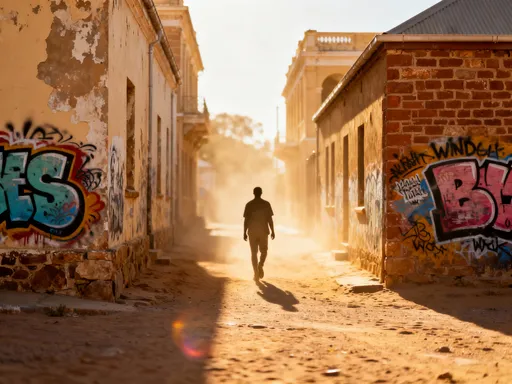
You know that feeling when a city surprises you? Windhoek isn’t just Namibia’s capital—it’s a quiet rebel with its own rhythm. I wandered its sunlit streets, not chasing landmarks, but hunting moments: a courtyard café humming with laughter, a graffiti-covered alley whispering stories. This is urban space reimagined—raw, real, and refreshingly unpolished. If you think African cities are all chaos or cliché, let Windhoek rewrite your map. Here, the pulse is steady, the air carries warmth without weight, and the city unfolds not in grand gestures but in subtle glances. It’s a place where order and soul coexist, inviting those who look closely to discover a different kind of urban beauty—one built on stillness, color, and the quiet confidence of everyday life.
First Impressions: Beyond the Expected
Windhoek greets visitors not with clamor, but with calm. Unlike the sprawling metropolises often associated with African capitals, this city unfolds gently—low-rise buildings line wide, tree-lined avenues, and the skyline blends softly into the surrounding hills. The first thing many notice is the space: open roads, unhurried pedestrians, and an absence of the congestion that defines so many urban centers. This sense of room to breathe is not accidental; it is part of Windhoek’s identity. Designed with foresight and shaped by its desert environment, the city prioritizes clarity over clutter, offering a refreshing contrast to the stereotype of African cities as overcrowded or chaotic.
The architecture tells a layered story. German colonial influences are evident in the gabled roofs, arched windows, and sand-colored stucco of buildings in the central district. Structures like the Christuskirche, with its distinctive green spire, stand as quiet reminders of a complex past. Yet these landmarks do not dominate—they coexist with modern government buildings, African-owned businesses, and vibrant street life that reflects a present-day Namibia. There is no attempt to erase history, but neither is there a glorification of it. Instead, Windhoek wears its past lightly, allowing contemporary culture to rise alongside it. This balance creates a visual harmony that feels both respectful and forward-looking.
For travelers accustomed to cities that announce themselves with noise and neon, Windhoek may initially seem underwhelming. But that is precisely its strength. It does not perform; it simply is. Its quiet confidence invites deeper engagement. You begin to notice details—the way sunlight hits a painted wall in the late afternoon, the rhythm of a vendor arranging fruit, the soft murmur of Afrikaans, English, and Oshiwambo drifting from open café windows. These are not tourist spectacles; they are the authentic textures of daily life. And it is in these unscripted moments that Windhoek reveals its true character.
The Pulse of Public Spaces: Where Life Unfolds Naturally
Public spaces in Windhoek are not designed for show—they are lived in. They serve as communal living rooms where residents gather, connect, and carry on the rhythm of daily existence. The Central Business District, with its wide sidewalks and shaded walkways, encourages pedestrian movement and casual encounters. Benches under camel thorn trees offer rest between errands, while open plazas host impromptu conversations and children playing after school. These areas are not manicured for tourists but maintained for the people who use them every day, which gives them an authenticity often missing in more commercialized urban centers.
One of the city’s most cherished green spaces is the National Botanical Garden, a peaceful retreat nestled near the city center. Unlike formal gardens that prioritize aesthetics over use, this one invites interaction. Families picnic on the grass, couples stroll along winding paths, and students read under the shade of indigenous aloes and quiver trees. The garden functions as a green lung, offering relief from the dry heat while also preserving native flora. It is a place where nature and city life coexist without tension—a reminder that urban planning can support both ecological awareness and human well-being.
Equally important are the informal spaces that thrive on the edges of official design. Street vendors set up near transport hubs, selling everything from grilled corn to handmade crafts. These corners buzz with energy, especially in the early morning and late afternoon when commuters pass through. While not always tidy, these zones are essential to the city’s economic and social fabric. They reflect resilience and ingenuity, offering livelihoods and community connection in equal measure. Unlike forced marketplaces created for tourist consumption, these are organic expressions of urban life—places where real needs are met, and real conversations happen.
What makes these public spaces meaningful is their accessibility. There are no entry fees, no strict rules, and no expectation to spend money. A grandmother can sit for hours watching the world go by; a young worker can eat lunch on a park bench without feeling out of place. This inclusivity fosters a sense of ownership among residents, reinforcing the idea that the city belongs to everyone. In a world where urban spaces are increasingly privatized or commercialized, Windhoek’s approach feels quietly revolutionary—a model of how cities can nurture belonging through simple, thoughtful design.
Street Art & Urban Canvas: Murals That Speak
In neighborhoods like Katutura, art is not confined to galleries—it lives on walls, alleyways, and forgotten facades. Here, street art is more than decoration; it is storytelling in its most direct form. Murals depict scenes of daily life, historical moments, and visions of the future, painted in bold colors that defy the monotony of concrete. Some honor national heroes, others celebrate women’s strength or children’s dreams. Humor appears too—a cartoonish goat wearing sunglasses, a dancing elephant with a briefcase—reminding viewers that joy is part of resistance.
Walking through these streets feels like reading an open-air journal. Each mural carries context, often rooted in the community’s experiences. In the past, Katutura was shaped by apartheid-era segregation, designed as a township for Black residents relocated from central Windhoek. Today, it stands as a symbol of resilience and cultural pride. The art reflects this transformation—no longer defined by limitation, but by creativity and self-expression. Local artists, many trained through community programs, use paint to reclaim space and voice. Their work transforms neglected corners into destinations, proving that beauty and meaning can emerge even in overlooked places.
One striking feature of Windhoek’s street art is its lack of confrontation. While some murals address social issues—education, health, unity—they do so with hope rather than anger. A common theme is intergenerational connection: elders passing wisdom to youth, families standing together, hands joined across ages. These images reinforce values that matter deeply in Namibian culture—respect, community, and continuity. They are not created for international acclaim but for local eyes, serving as daily affirmations of identity and belonging.
For visitors, engaging with this art requires slowing down. There are no official tours or maps, no entry tickets or audio guides. The experience is earned through walking, observing, and sometimes asking questions of nearby residents. This intimacy makes the encounter more personal and memorable. It also aligns with a broader truth about Windhoek: its treasures are not handed over—they are discovered. And in that act of discovery, one begins to see the city not as a destination, but as a conversation.
Architectural Layers: Colonial Bones, African Skin
Windhoek’s architecture is a dialogue across time. German colonial structures—built in the early 20th century—form the foundation of the city’s built environment. These include the Alte Feste (Old Fortress), now a museum, and the ornate Tintenpalast (Ink Palace), home to Namibia’s parliament. Their solid stone walls and European proportions reflect a period of occupation, yet today they serve a new nation. Rather than being symbols of division, they have been repurposed as spaces of governance and memory, integrating into a national narrative that acknowledges the past without being bound by it.
Alongside these colonial remnants stand buildings from later eras—Art Deco post offices, mid-century administrative blocks, and modern structures with clean lines and solar shading suited to the climate. This mix creates a visual timeline, where each decade has left its mark without erasing what came before. On Independence Avenue, for example, one can see a 1930s bank building with geometric detailing standing across from a contemporary shopping complex with glass façades and indigenous landscaping. The contrast is not jarring; instead, it feels like layers of a living city, each contributing to a cohesive whole.
What stands out is the way African design sensibilities have begun to shape new construction. Government buildings and cultural centers increasingly incorporate local materials, patterns, and spatial concepts. Curved walls echo traditional homestead layouts, while earth-toned finishes blend with the surrounding landscape. These choices are not merely aesthetic—they reflect a growing confidence in Namibian identity. Architecture becomes a form of cultural assertion, saying that modernity does not require imitation of Western models, but can grow from local roots.
This architectural harmony is not perfect—some areas suffer from neglect, and rapid development poses challenges. Yet overall, Windhoek manages a rare balance: preserving heritage while embracing change. It does not tear down to rebuild, nor does it freeze itself in the past. Instead, it allows evolution to happen with intention. For those who appreciate cities as living documents, Windhoek offers a compelling example of how built environments can reflect both memory and progress.
Hidden Courtyards & Quiet Corners: The City’s Secret Breathing Rooms
Amid the structured streets and public plazas, Windhoek hides its most intimate spaces—courtyards, gardens, and rooftop terraces known mainly to locals. These are the city’s quiet breathing rooms, places where pace slows and atmosphere deepens. Tucked behind unassuming doors, they offer refuge from the dry heat and urban motion. A converted colonial house in the suburb of Klein Windhoek now houses a café where jasmine climbs the walls and the only sound is the clink of teacups. Another, near the Gymkhana Club, shelters a small library garden—benches under acacia trees, shelves of donated books, and the occasional poetry reading at dusk.
These spaces are not advertised heavily, nor do they appear on most tourist maps. They thrive through word of mouth, sustained by those who value stillness in a world of noise. Some are attached to cultural centers, others to private homes opened for community use. Their charm lies in their simplicity: no elaborate menus, no loud music, no digital distractions. Just space to sit, think, and reconnect. For residents, they serve as sanctuaries; for attentive visitors, they offer a rare glimpse into the city’s emotional core.
One of the most cherished hidden spots is a rooftop bar near Robert Mugabe Avenue, accessible by a narrow staircase behind a bookstore. From above, the city spreads in silence—red rooftops, distant hills, and the soft glow of streetlights at twilight. There is no music, no crowd, just the occasional murmur of conversation. People come here not to party, but to reflect. It is a place of quiet celebration—of a workweek ended, a friendship renewed, a moment of peace claimed. In a world that glorifies busyness, such spaces are radical in their simplicity.
Discovering these corners requires curiosity and a willingness to wander without destination. They cannot be rushed or forced. But for those who take the time, the reward is authenticity. These places do not perform—they simply exist, offering a different kind of urban experience: one rooted in calm, connection, and the beauty of ordinary moments. In them, Windhoek reveals not just its geography, but its soul.
Mobility and Mindset: Moving Through the City
How you move through Windhoek shapes what you see and how you feel. The city can be navigated by car, minibus taxi, or on foot—each mode offering a distinct perspective. Driving provides efficiency, especially for longer distances, but it creates a barrier between observer and observed. The air-conditioned silence of a vehicle separates you from street sounds, smells, and spontaneous interactions. It allows coverage of more ground, but at the cost of intimacy.
Minibus taxis, known locally as “hijackers” despite the misleading name, are the lifeblood of daily transit. These brightly painted vans follow flexible routes, picking up and dropping off passengers throughout the city and surrounding townships. Riding one is an immersion in local rhythm—conversations flow, music plays softly, and drivers greet regulars by name. While not always comfortable, the experience is deeply human. It reveals how residents navigate their world with resourcefulness and connection. For visitors, taking a minibus—even just one leg of a journey—can be a powerful way to engage with the city beyond the surface.
Yet the most revealing way to experience Windhoek is on foot. Walking allows you to notice the small things: the pattern of light through a wrought-iron gate, the scent of roasting peanuts from a street cart, the laughter spilling from a courtyard. It slows perception, making space for observation and reflection. Certain areas, like the area around Post Street Mall and the Christuskirche, are especially walkable, with shaded paths and pedestrian-friendly crossings. Early mornings and late afternoons are ideal times, when temperatures are mild and activity is high.
Safety is a reasonable concern for any traveler, but Windhoek is generally secure in well-populated areas during daylight hours. As in any city, awareness matters—keeping valuables discreet, avoiding isolated streets at night, and trusting local advice. Many residents are happy to offer directions or recommendations, often with a warm smile. Learning a few phrases in local languages, such as “Molo” (hello in Oshiwambo) or “Dankie” (thank you in Afrikaans), can open doors and deepen connections. Moving through the city with respect and curiosity fosters goodwill and enriches the journey.
Why Urban Space Matters: Windhoek’s Quiet Revolution
Windhoek does not impress with size or speed. It has no towering skyscrapers, no subway systems, no endless traffic. And yet, in its deliberate pace, open spaces, and human-scaled design, it offers something rare: a city that prioritizes well-being over spectacle. Its streets are not designed to move cars quickly, but to allow people to move comfortably. Its buildings do not shout for attention, but settle into the landscape with quiet dignity. This is urbanism with intention—a model that values light, air, and calm as essential components of daily life.
In a continent often portrayed through extremes—either struggling or exoticized—Windhoek presents a different narrative. It is a functioning, thoughtful capital that balances heritage and progress, order and warmth, public space and private retreat. It challenges the assumption that African cities must be chaotic or underdeveloped, proving that quiet strength can be just as powerful as grand displays. More than that, it shows how urban design can support cultural pride and emotional resilience.
The city’s approach to space has a direct impact on quality of life. Wide sidewalks invite walking. Green areas provide cooling and recreation. Art and architecture reflect identity. These elements may seem small in isolation, but together they create an environment where people feel seen and valued. For families, this means safe places to gather. For individuals, it means room to breathe and think. In a world where cities are growing faster than ever, Windhoek reminds us that growth does not have to mean density or noise—it can mean clarity and care.
To travel here is not just to visit a place, but to reconsider what cities can be. It invites a shift in perspective—from seeking monuments to noticing moments, from chasing excitement to appreciating stillness. Windhoek’s greatest offering is not a single attraction, but a way of being. It asks travelers to slow down, look closely, and listen. In doing so, they may find not only a deeper understanding of this city, but of themselves. For in the quiet corners of Windhoek, one discovers the poetry of everyday life—and the enduring power of urban soul.