Jeju Island isn’t just about Hallasan and crowded beaches—deep within its volcanic terrain lie untouched protected zones few travelers ever see. I stumbled upon these quiet wonders by chance, and what I found was beyond imagination: pristine trails, rare wildlife, and landscapes shaped by centuries of natural balance. These conservation areas preserve Jeju’s soul, offering not just beauty, but a deeper connection to nature most miss. Far from the selfie sticks and tour buses, these hidden sanctuaries remain guarded by law and low visibility, allowing ecosystems to thrive undisturbed. For the thoughtful traveler, they represent a rare opportunity—to walk where few have walked, to listen to silence, and to witness the island as it once was, and still can be.
Why Hidden Protected Areas Matter in Jeju
Jeju Island holds a prestigious title: it is recognized as a UNESCO Biosphere Reserve, a designation that underscores its global ecological significance. This status isn’t just symbolic—it reflects a comprehensive network of protected areas designed to conserve the island’s unique volcanic landscapes, rare flora and fauna, and delicate ecosystems. While millions flock each year to Hallasan National Park or the shores of Jungmun Beach, a quieter, more fragile world exists beyond the postcard scenes. These lesser-known conservation zones are often overlooked, not due to lack of beauty, but because they are intentionally kept low-profile to prevent environmental degradation.
What sets these areas apart from typical tourist destinations is their commitment to preservation over convenience. Unlike commercialized sites with paved paths, souvenir shops, and food stalls, these protected zones enforce strict rules: no littering, no off-trail hiking, no drones, and limited visitor numbers. These measures are not arbitrary; they are scientifically grounded strategies to protect endemic species such as the Jeju mole and the Hallasan toad, both of which exist nowhere else on Earth. The volcanic soil, shaped by eruptions thousands of years ago, supports a unique blend of subtropical and temperate plant life, including rare orchids and mosses that take decades to establish.
Visiting these areas isn’t merely a personal adventure—it’s an act of responsible tourism. When travelers choose to explore these quiet corners with respect and awareness, they contribute to the sustainability of Jeju’s natural heritage. Entrance fees, where applicable, often go directly to local conservation programs. Moreover, increased but mindful visitation helps raise public awareness about the importance of protecting such spaces. The goal is not to turn them into attractions, but to foster a culture of reverence for nature. In a world where natural spaces are shrinking, Jeju’s hidden reserves offer a model of how tourism and ecology can coexist—provided we tread lightly.
Gujwa’s Secret Forest Trails: A Walk Through Pristine Nature
Nestled on the northeastern coast, the Gujwa area is often bypassed by tourists heading to Seongsan Ilchulbong or Udo Island. Yet, just inland from the coastline, a network of forested conservation trails winds through one of Jeju’s most ecologically rich zones. Here, the air is thick with the scent of pine and damp earth, and the ground is carpeted with layers of moss that soften every footstep. These trails, part of the Jeju Olle’s lesser-known green corridors, traverse protected forest reserves where subtropical vegetation flourishes under a canopy of zelkova and camellia trees.
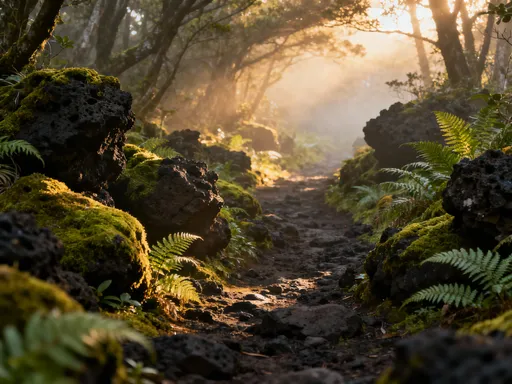
Walking these paths feels like stepping into a living archive of Jeju’s natural history. Lava rocks, cooled and weathered over millennia, are draped in emerald moss and lichens, their surfaces telling silent stories of ancient eruptions. Birdsong—clear and varied—fills the air, from the melodic call of the Japanese white-eye to the rustle of the vinous-throated parrotbill in the underbrush. Because these trails are not heavily promoted and lack flashy signage, visitor numbers remain low, allowing wildlife to thrive undisturbed. It’s not uncommon to see wild deer grazing at dawn or spot a pheasant darting across the path.
For those seeking access, the best entry points are near the small village of Gomori or along the less-traveled segments of the Jeju Olle Route 21. Early morning visits are ideal, both for cooler temperatures and greater chances of wildlife sightings. Local maps, available at the Gujwa Town Office or through the Jeju Olle Foundation, mark the designated trails and note seasonal restrictions. Hikers are advised to wear sturdy shoes, carry water, and avoid bringing food that might attract animals. Most importantly, staying on marked paths is essential—venturing off-trail risks damaging fragile root systems and disturbing nesting grounds. This is not a place for shortcuts, but for slow, intentional movement through nature.
Saebyeol Oreum: A Protected Volcanic Gem Few Know
Rising gently from the rural outskirts of Pyoseon, Saebyeol Oreum is one of Jeju’s many parasitic volcanic cones—smaller peaks formed by secondary eruptions along the flanks of larger volcanoes. Unlike its famous cousin, Seongsan Ilchulbong, Saebyeol remains largely unknown to international tourists. Nestled within a designated conservation area, it is protected from development and receives only a trickle of visitors, mostly local hikers and researchers. This obscurity is precisely what makes it special: it has retained its ecological integrity, offering a glimpse into Jeju’s untouched volcanic landscapes.
The ascent to Saebyeol Oreum is modest but rewarding. The trail, unpaved and unlit, winds through grassy slopes dotted with native wildflowers like the Jeju mountain bellflower and Korean gentian. At the summit, the crater opens into a serene bowl of green, where alpine plants adapted to high winds and thin soil cling to life. The silence here is profound—no loudspeakers, no snack vendors, just the whisper of wind across the rim. From the top, panoramic views stretch across the southeastern coast, with the distant peaks of Hallasan emerging on clear days.
What makes Saebyeol Oreum ecologically significant is its role as a habitat for rare plant species and pollinators. The microclimate within the crater supports a unique ecosystem, isolated from surrounding farmland and urban areas. Because the site is protected under Jeju’s Natural Environment Conservation Ordinance, activities like camping, fires, and drone flights are strictly prohibited. There are no restrooms or convenience stores—only a small information board explaining the area’s ecological value. This lack of infrastructure may deter some, but for others, it enhances the sense of discovery. The experience is not about comfort, but connection: to the land, to its history, and to the quiet forces that shaped it.
The Coastal Wetlands of Hado: Where Nature Breathes Slowly
On Jeju’s southwestern coast, near the village of Hado, lies a network of coastal wetlands that pulse with quiet life. These marshlands, fed by underground springs and tidal influences, are part of Jeju’s Ramsar-designated wetland system, recognized for their international importance in supporting biodiversity. Unlike the dramatic cliffs or black-sand beaches that draw crowds elsewhere, Hado’s wetlands are subtle in their beauty—wide expanses of reeds, shallow pools reflecting the sky, and wooden boardwalks that guide visitors through the delicate terrain.
These wetlands serve as a critical stopover for migratory birds traveling the East Asian-Australasian Flyway. From November to March, flocks of black-faced spoonbills, great egrets, and bean geese rest here, feeding in the nutrient-rich mudflats. Even in summer, when bird numbers dwindle, the area remains alive with dragonflies, frogs, and rare aquatic plants like the Jeju water lily. The wetlands also act as natural water filters, purifying runoff before it reaches the sea, and help buffer coastal communities from storm surges.
Access to the Hado wetlands is intentionally limited. A single boardwalk trail, about 1.2 kilometers long, allows visitors to observe without disturbing. Bicycles and pets are not permitted, and signage in Korean and English reminds guests to keep voices low. The best time to visit is early morning or late afternoon, when light slants across the water and animals are most active. Local conservation volunteers often lead guided walks on weekends, offering insights into the ecosystem’s rhythms. Because the wetlands are sensitive to pollution and trampling, even small infractions—like stepping off the boardwalk or tossing a wrapper—can have lasting impacts. The experience here is not about adventure, but about presence: learning to move slowly, to listen, and to witness nature on its own terms.
How to Visit Responsibly: Rules That Protect the Wild
Exploring Jeju’s hidden protected areas is a privilege, not a right. Each of these zones exists in balance, sustained by careful management and public cooperation. To ensure these places remain unspoiled for future generations, visitors must adhere to a clear set of responsible practices. The first and most fundamental rule is to stay on marked trails. These paths are engineered to minimize erosion and protect root systems, and stepping off them—even to take a photo—can damage fragile vegetation and disturb wildlife habitats.
Another critical guideline is to pack out all waste. While some sites have trash bins near entrances, many do not, especially in remote conservation zones. Carrying a small bag for used tissues, food wrappers, or fruit peels is essential. Organic waste may seem harmless, but introducing foreign matter can alter soil chemistry and attract invasive species. Similarly, feeding animals—even with good intentions—disrupts natural foraging behaviors and can lead to dependency on humans.
Drones, while popular among travelers, are strictly prohibited in most protected areas of Jeju. Their noise and movement stress birds and other wildlife, and they can interfere with scientific monitoring. Before visiting, travelers should check local regulations through the Jeju Provincial Office’s official website or visitor centers. Some trails may be closed seasonally for nesting periods or ecological restoration. Additionally, using eco-friendly transportation—such as public buses, bicycles, or electric shuttles—reduces carbon emissions and congestion in sensitive areas.
Respect also extends to cultural norms. Many conservation zones are near rural villages where residents maintain traditional farming and fishing practices. Visitors should avoid trespassing on private land, keep noise to a minimum, and dress modestly. Learning a few basic Korean phrases—such as “thank you” (gamsahamnida) or “excuse me” (sillyehamnida)—can go a long way in building goodwill. Responsible tourism is not just about rules; it’s about mindset: approaching nature with humility, curiosity, and care.
Beyond the Tourist Map: Finding More Hidden Zones
For those inspired to explore further, Jeju offers more than what appears on standard travel brochures. The island’s network of protected areas is extensive, and many remain off the radar by design. One of the best ways to discover them is through direct engagement with local experts. Park rangers at Jeju’s nature centers often share insights about lesser-known trails and seasonal phenomena. The Jeju Olle Foundation and the Jeju Free International City Development Center also publish official conservation maps that highlight ecological zones, some of which are not marked on commercial GPS systems.
Another strategy is to travel beyond the main highways. Villages like Saejeong, Chupungnyeong, and Hado-ri are surrounded by protected woodlands and wetlands that are easily accessible but rarely visited. Renting a bicycle and following local roads can lead to unexpected discoveries—a quiet oreum, a spring-fed stream, or a meadow buzzing with pollinators. Pairing these visits with cultural stops—such as a traditional Jeju stone park, a local tea farm, or a village museum—creates a balanced itinerary that honors both nature and heritage.
It’s also worth noting that some conservation areas are only open during certain times of the year. For example, portions of the Hallasan buffer zones close in spring to protect nesting birds, while certain wetlands restrict access during monsoon season. Checking the official Jeju Tourism Organization website or contacting the local community center in advance ensures a smooth and respectful visit. The goal is not to “collect” destinations, but to deepen understanding—of geology, ecology, and the quiet ways in which humans and nature can coexist.
The Deeper Reward: Connecting with Jeju’s True Spirit
At first glance, these hidden protected areas may seem like simple scenic escapes. But for those who slow down and pay attention, they offer something more profound: a chance to reconnect with the essence of Jeju. In a world dominated by speed and noise, these quiet spaces invite stillness. They ask nothing of us but presence—of mind, of body, of spirit. Walking through a moss-draped forest or watching a heron take flight at dawn is not just a visual experience; it is a sensory and emotional one, awakening a sense of wonder that is too often dulled by daily life.
These places are not just reservoirs of biodiversity—they are keepers of memory. They hold the stories of volcanic fires, ancient winds, and centuries of ecological balance. They remind us that beauty does not require crowds or fanfare. True beauty often thrives in stillness, in obscurity, in the places we overlook. By visiting them with care, we do more than enjoy a scenic hike; we participate in a quiet act of preservation.
Jeju’s identity is not defined by its tourist ratings or Instagram likes, but by its resilience, its natural harmony, and its deep-rooted respect for the land. The women and men who have lived here for generations understand this—they farm the volcanic soil with patience, they build homes from basalt stone, they speak of the island as a living being. When we choose to explore its hidden corners with reverence, we honor that wisdom.
The call is not to turn these places into destinations, but to see them as sanctuaries. To leave only footprints. To take only memories. To return home not with souvenirs, but with a renewed sense of connection—to nature, to place, to self. In protecting Jeju’s quiet heart, we also protect something within ourselves: the capacity for awe, for stillness, for belonging. And that, perhaps, is the greatest journey of all.